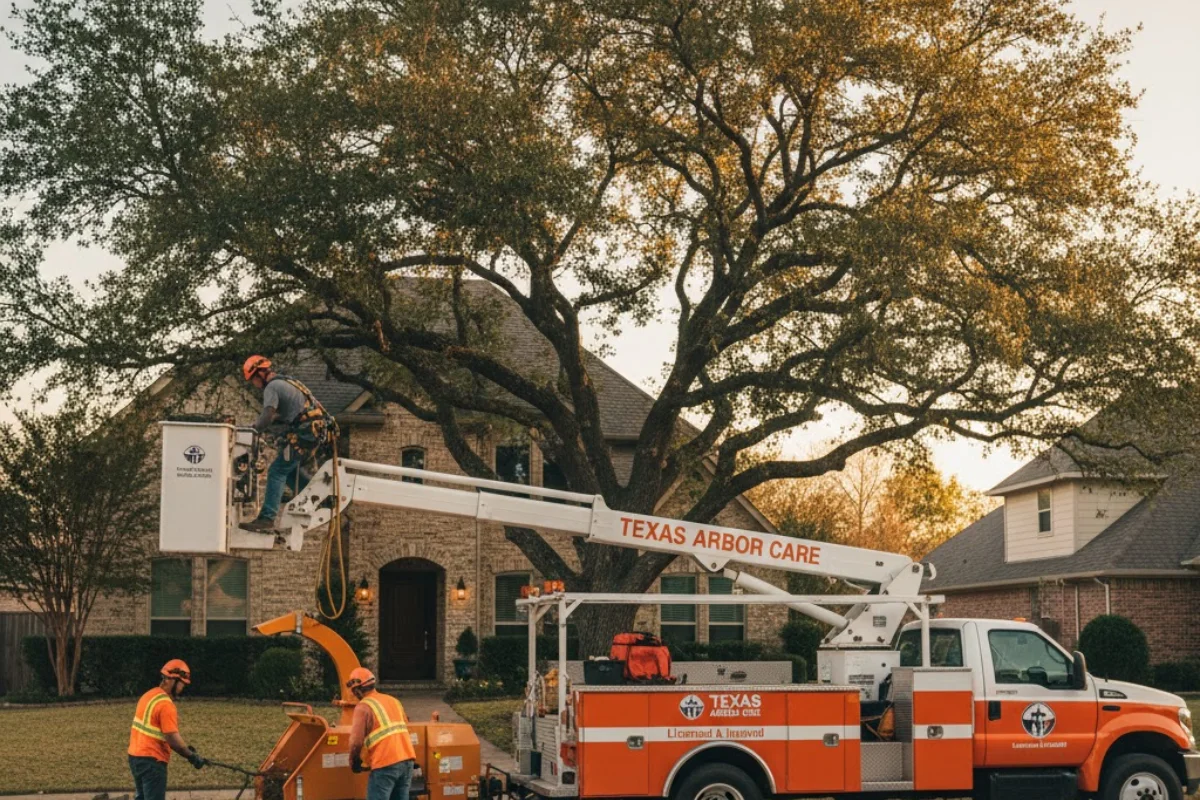

Tree service search demand in Texas does not rise gradually. It surges when storms knock trees down, split trunks, or leave large limbs hanging over homes and roads. These moments create immediate safety and access risks that force fast action.
After high winds and heavy rain, homeowners search for help to clear fallen trees, remove hazards, and restore entry to their property. Entire neighborhoods can face the same danger at once, creating sharp bursts of searches in cities like Houston, Dallas, Austin, and San Antonio.
Because most tree work is triggered by sudden failure rather than slow decline, search behavior is dominated by emergencies. Demand spikes right after storms and drops once debris is cleared and immediate risks are removed.
Why high winds and saturated soil trigger sudden tree service searches
Severe storms combine strong wind with waterlogged ground, which weakens root grip and increases canopy pressure. When gusts push against heavy, rain-soaked branches, trees that once stood firm can suddenly tilt or snap.
Homeowners react the moment stability changes. A newly leaning trunk or cracked limb signals imminent danger to roofs, fences, and vehicles. This visible risk triggers urgent searches for a local tree service company to secure or remove the threat.
Saturated soil plays a critical role. Prolonged rain loosens the earth around roots, reducing anchoring strength. Even moderate winds can then uproot mature trees, creating immediate need for emergency tree removal.
These failures cluster in the hours after the storm passes. As daylight returns, residents in areas like Houston and Dallas discover identical damage across their streets and begin simultaneous tree hazard assessment searches.
Because the cause is sudden and external, there is no gradual lead-up. One night of wind and rain can convert routine yards into high-risk zones that demand rapid professional response.
Once unstable trees are cut back or removed, search activity drops quickly. The spike exists only while wind- and water-driven instability presents an active safety threat.
How fallen or leaning trees compress homeowner decision-making
A tree on the ground or tilting toward a structure creates immediate danger. Homeowners stop comparing options and focus on removing the risk before it damages the house or blocks access.
This visible hazard shortens the decision path. Instead of researching long-term tree care, people search for an available emergency tree service that can arrive quickly and stabilize the situation.
Access loss increases urgency. A trunk across a driveway or a large limb on a roof prevents normal movement and raises the chance of further collapse. Homeowners call a nearby tree removal company as soon as they confirm the obstruction.
Uncertainty adds pressure. A partially uprooted tree can fall without warning, especially if winds return. Waiting feels unsafe, so homeowners prioritize immediate response over extended comparison.
In storm-prone metros like Austin and San Antonio, repeated wind events make residents more sensitive to early signs of failure. Even a small lean after heavy rain triggers rapid tree hazard removal searches.
Once the tree is secured or removed and access is restored, decision pace slows. Urgent searches give way to planned cleanup and restoration after the immediate threat is eliminated.
Why emergency tree removal searches differ from routine trimming searches
Emergency tree removal searches begin with an active safety threat. A fallen trunk, split limb, or uprooted base creates immediate danger to structures and people. Homeowners search for fast tree removal to eliminate risk, not for gradual maintenance.
Routine trimming searches focus on appearance and long-term health. Homeowners compare pruning styles, schedules, and pricing over time. Emergency searches skip this evaluation because delay can lead to further damage.
Scope also differs. Emergency work centers on stabilization and clearance of hazards. Routine work involves shaping canopies and improving growth patterns through planned tree trimming services.
Timing separates the two. Emergency demand appears in tight bursts right after storms. Routine demand spreads evenly through the year as part of ongoing yard care.
In dense Texas cities like Houston and Dallas, storm debris can block streets and driveways at once. This creates synchronized emergency tree service searches even while normal trimming projects continue elsewhere.
Because of this, storm-driven tree service demand in Texas measures immediate safety needs. Routine trimming searches measure preventative maintenance and aesthetic improvement.
How urgency shifts tree service searches from research to direct calls
When a damaged tree threatens a roof, vehicle, or power line, homeowners stop researching and start dialing. The search engine becomes a fast way to reach an available tree service rather than a place to compare pruning options.
Urgency shortens the path from query to contact. People scan for a nearby emergency tree removal provider, confirm availability, and call immediately. Reading detailed service pages feels risky while a limb could still fall.
Real-time response matters most. A live answer signals that crews can arrive and secure the hazard. If a call goes unanswered, homeowners move to the next visible tree removal company without hesitation.
Abundant local options accelerate switching. In metros like Houston, homeowners assume another qualified crew is one tap away, so they prioritize speed of connection over extended evaluation.
Forms and emails lose importance. Speaking directly to dispatch provides faster reassurance and a clearer arrival window than waiting for a reply from a website.
Once the hazard is cleared and safety restored, search behavior slows again for follow-up cleanup. The urgent, call-first phase ends as soon as the immediate risk is removed.
Why storm-driven tree service demand appears in short, intense bursts
Storm-driven tree service demand concentrates around the hours and days immediately after severe weather. When wind and rain cause widespread breakage at once, many households face the same safety problem at the same time.
This shared trigger synchronizes behavior. Instead of steady inquiries, entire streets begin searching for a local tree removal service within the same short window after the storm passes.
The burst is tied to hazard visibility. Daylight reveals fallen trunks, split limbs, and blocked access, which pushes rapid emergency tree service calls before the next round of weather arrives.
Geography sharpens the spike. Neighborhoods directly hit by stronger gusts or saturated soil show dense clusters of tree hazard removal requests, while nearby areas with lighter damage remain quiet.
Capacity limits intensify early demand. In large Texas metros like Dallas and Houston, crew schedules fill quickly after major storms, which pulls even more searches into the first days.
Once primary hazards are cleared and access restored, search activity drops toward baseline. The surge reflects immediate storm impact, not a permanent rise in everyday tree care.
How repeated storm seasons create cycles of cleanup then prevention work
After a major storm, most searches focus on immediate tree removal and debris clearance. Crews cut down fallen trunks, secure split limbs, and restore safe access to homes and streets.
When storms return in later seasons, previously weakened trees fail more easily. Multiple rounds of wind and saturation expose hidden decay and root damage, which increases the need for broader tree hazard mitigation.
This creates a predictable cycle. Early storms generate bursts of emergency cleanup. Later storms convert many properties to proactive tree pruning and selective removal to prevent repeat failures.
In wind-exposed areas around Austin and San Antonio, neighborhoods can experience this shift over a few years. Homeowners who once called for urgent removal begin scheduling preventative tree trimming services between storm events.
Utility and insurance responses reinforce the pattern. After repeated outages or claims, more properties seek risk reduction rather than waiting for the next failure.
Over time, storm-driven search demand moves from reactive clearance to planned prevention. Cleanup spikes are followed by steadier waves of preventative tree work until the next severe storm resets the cycle.
Why neighborhood-level storm damage synchronizes tree service searches
Storm damage rarely spreads evenly across an entire city. A narrow band of stronger wind or heavier rain can topple trees on a few streets while nearby areas remain mostly untouched. Homes inside that band experience the same sudden hazard at the same time.
This shared impact synchronizes behavior. As soon as residents step outside and see fallen trunks or hanging limbs, many households begin searching for a local tree service company within minutes of each other.
Visible, repeated damage amplifies urgency. Seeing multiple driveways blocked and branches on roofs signals that the risk is widespread, which accelerates local emergency tree removal searches.
Neighbors influence timing. Conversations, photos, and contractor sightings spread quickly through the block, prompting more homes to request a tree hazard assessment the same day.
In dense Texas metros like Houston, even a localized impact zone can contain hundreds of properties. That concentration turns steady visibility for nearby tree removal services into a sharp, short-lived wave of calls.
Once the common hazards are cleared and access restored, the synchronized wave breaks. Searches taper because the shared neighborhood trigger has been resolved.
Why tree service search visibility stays steady while post-storm calls surge
The online visibility of a local tree service company changes slowly, but storm damage changes demand instantly. Rankings and map placement remain stable even when high winds suddenly create hazards across many properties.
After a storm, numerous homeowners contact the same visible providers within a short window. Call volume surges not because visibility improved, but because fallen and unstable trees create immediate safety needs.
This produces sharp swings in inquiries without ranking movement. In cities like Houston or Dallas, a company can receive routine trimming requests one week and overwhelming emergency tree removal calls the next if severe weather hits.
As soon as hazards are cleared and access is restored, call volume falls back toward baseline. The decline happens even though the business appears in the same position in search results.
Understanding this separation prevents misreading spikes as growth and quiet periods as decline. Search visibility reflects long-term presence, while post-storm calls reflect short-term safety crises.
Storm-driven tree service search demand in Texas is therefore burst-based. Stable visibility meets sudden, event-triggered homeowner behavior that turns constant presence into concentrated waves of urgent contact.
Environmental and safety forces behind storm-driven tree service searches in Texas
Severe storms change how Texans perceive tree risk and property safety. These external conditions push homeowners to remove hazards immediately after wind and rain events rather than plan gradual maintenance.
How wind gusts and soil saturation determine failure risk
Strong gusts load heavy canopies while waterlogged ground loosens root hold. When both occur together, even healthy-looking trees can uproot, triggering urgent tree hazard removal searches.
Why blocked driveways and power lines accelerate search urgency
A fallen trunk that cuts off entry or threatens utilities turns inconvenience into danger. Homeowners prioritize rapid emergency tree removal to restore access and prevent outages or fire risk.
How insurance and utility responses influence search timing
Guidance from insurers and utility crews often requires professional clearance before further work proceeds. These requirements concentrate tree service calls into the first safe days after the storm.
Why dense Texas metros amplify localized tree hazard demand
Cities like Houston, Dallas, Austin, and San Antonio pack many trees and structures into small areas. Localized wind damage converts steady visibility for nearby tree removal companies into intense, short-lived bursts of requests.
How tree service storm-driven search demand in Texas should be interpreted over time
Spikes in searches reflect immediate safety threats created by specific storms, not steady market growth. High urgency produces high call volume for brief periods, then demand returns to baseline once hazards are cleared.
Across multiple seasons, repeated storms shift some demand from cleanup to prevention, but the burst pattern remains tied to weather events. Stable tree service search visibility meets synchronized, post-storm homeowner action driven by safety and access.