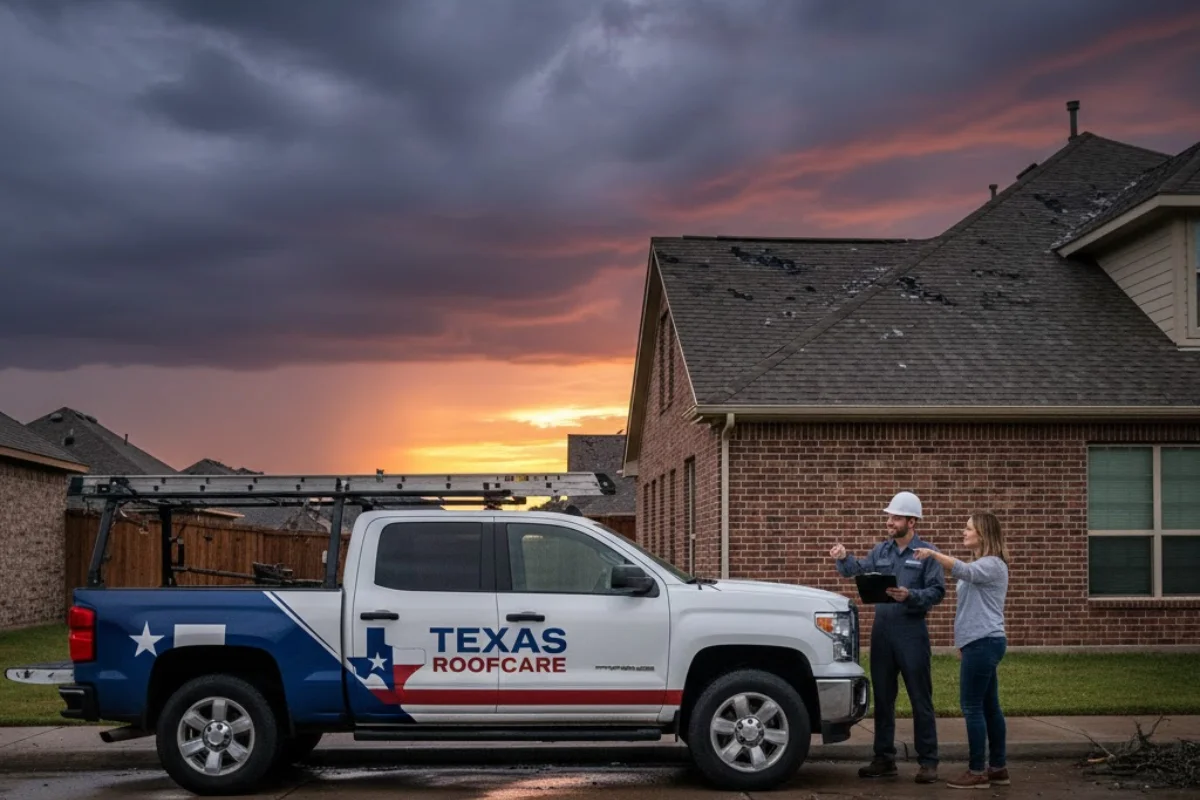

Roofing search demand in Texas does not rise evenly through the year. It spikes after hailstorms when impact damage and wind-driven debris threaten the integrity of thousands of roofs at once. These events turn routine maintenance concerns into urgent structural questions.
After a storm passes, homeowners look up and see dents, missing shingles, or scattered granules. Many others see nothing but suspect hidden damage. This uncertainty triggers immediate searches for roof inspections and local roofing contractors across cities like Houston, Dallas, Austin, and San Antonio.
Because insurance claims often determine whether repair or replacement is possible, search timing follows claim deadlines and adjuster schedules. Roofing demand therefore appears in short, intense post-storm bursts rather than as gradual, predictable growth.
Why hailstorms trigger sudden spikes in roofing searches across Texas
Hail impacts create immediate uncertainty about roof integrity. Even small hailstones can bruise shingles and weaken protective layers without obvious leaks. Homeowners search for a local roofing contractor to confirm whether damage is cosmetic or structural.
The trigger is shared and simultaneous. When a storm passes over a neighborhood, hundreds of roofs experience the same impact at the same time. Search activity rises sharply as many households look for roof inspection services within hours or days.
Visible cues accelerate the surge. Dented gutters, cracked vents, and scattered shingle granules signal potential damage above. These signs push homeowners in cities like Dallas and Austin to begin urgent roof damage assessment searches.
Hidden damage amplifies concern. A roof can be compromised without immediate leaks, which makes waiting feel risky. Homeowners search to verify condition before the next rain tests weakened areas.
Because hail events are localized, demand concentrates geographically. Blocks directly under the storm track produce dense clusters of roof repair searches, while nearby areas remain normal.
Once inspections are scheduled and initial assessments completed, search volume tapers. The spike exists while uncertainty about hail impact is highest, not as a permanent rise in everyday roofing demand.
How visible and hidden roof damage compress homeowner decision-making
After a hailstorm, homeowners face two types of signals at once: obvious dents and missing shingles, and invisible impact damage that may not leak yet. This mix of certainty and uncertainty shortens the time spent comparing options.
Visible damage creates immediate concern. A cracked shingle or bent flashing suggests the roof has already been compromised. Homeowners search for an emergency roof inspection rather than browsing general roofing information.
Hidden damage adds pressure from the unknown. Bruised shingles and weakened seal strips can fail later under sun and rain. Waiting feels risky because the next storm could turn unseen damage into active leaks.
This risk compresses the decision path. Instead of gathering multiple quotes over weeks, homeowners move quickly to contact a local roofing contractor who can assess condition on site.
The effect is strong in storm-prone metros like Houston, where repeated severe weather raises awareness of delayed failures. Homeowners act sooner to avoid surprise water intrusion.
As soon as a professional confirms the roof’s condition, decision pace slows again. Urgent searches give way to planned next steps once uncertainty about visible and hidden damage is resolved.
Why insurance claim timelines accelerate roofing search urgency
After a hailstorm, the clock for an insurance claim starts immediately. Most policies require prompt reporting and timely inspections, which pushes homeowners to begin roofing searches right away.
This deadline pressure removes the option to wait and compare slowly. Homeowners search for a local roofing contractor who can document damage before claim windows close or evidence fades.
Adjuster scheduling adds another layer of urgency. Inspections often happen in waves after major storms, so homeowners try to secure a professional assessment before adjuster visits are fully booked.
In large Texas markets like Dallas and San Antonio, thousands of claims can be filed at once. Competition for inspection slots concentrates roof inspection searches into the first days and weeks after the storm.
The goal of the search is verification, not final repair. Homeowners need clear documentation to move the claim forward, which turns online search into a rapid step toward an on-site evaluation.
Once the claim is opened and inspections are scheduled, search intensity eases. Urgency peaks during the early claim period, then tapers as the process shifts from reporting to approval and repair planning.
How post-storm roofing searches differ from planned roof replacement searches
Post-storm searches begin with uncertainty and urgency. Homeowners look for a fast roof inspection to determine whether hail or wind caused claimable damage. The goal is immediate verification, not long-term planning.
Planned replacement searches start with known aging or wear. Homeowners compare materials, timelines, and budgets over weeks or months before contacting a roofing company. The decision feels elective rather than reactive.
Storm-driven searches focus on condition and documentation. Queries center on damage assessment and insurance coordination. Planned searches focus on options, warranties, and scheduling flexibility.
Timing also separates the two. Post-storm demand appears in tight bursts within days of the event. Planned demand spreads evenly across the year as roofs reach the end of service life at different times.
In metros like Austin and Houston, a major storm can overwhelm inspection capacity even while planned replacements continue at a steady pace. The two demand streams run in parallel but follow different clocks.
Because of this, storm-driven roofing search demand in Texas measures immediate risk and claim readiness. Planned replacement searches measure long-term maintenance and upgrade intent.
Why storm-driven roofing demand appears in short, intense bursts
Storm-driven roofing demand rises when a single weather event affects many roofs at once. Hail impact and high winds create simultaneous uncertainty across entire neighborhoods, causing homeowners to search for a local roofing contractor within the same narrow time window.
This shared trigger synchronizes behavior. Instead of spreading inquiries over months, hundreds of households begin roof inspection searches in the days immediately following the storm. Demand concentrates around the first clear-weather period after impact.
The burst is tied to verification, not completion. Homeowners search to confirm damage and start the insurance claim process. Once inspections are scheduled and claims are opened, search activity drops quickly.
Geography shapes the spike. Areas directly under the hail path see dense clusters of roof damage assessment requests, while nearby zones with lighter impact show little change.
Capacity limits intensify the peak. In cities like Dallas and Houston, inspection calendars fill rapidly after major storms, which pulls even more searches into the earliest days.
When the initial wave of inspections ends and claims move forward, demand returns toward baseline. The surge reflects post-storm uncertainty and claim timing, not a permanent rise in everyday roofing work.
How repeated hailstorms create cycles of repair followed by replacement
A single hail event often leads to localized repairs, not full replacement. Homeowners search for targeted roof repair to address immediate damage and keep the roof functional while an insurance claim is processed.
When storms return in later seasons, previously repaired areas face new impacts. Multiple rounds of damage weaken shingles, flashing, and underlayment, which increases the likelihood of full roof replacement searches.
This pattern creates waves. Early storms generate bursts of roof inspection and minor repair demand. Subsequent storms push more homeowners toward complete replacement as cumulative damage becomes harder to patch.
In hail-prone corridors near Dallas and Austin, neighborhoods can experience several significant storms over a few years. Each event converts some repaired roofs into candidates for total replacement.
Insurance outcomes reinforce the cycle. Initial claims may cover spot repairs, while later claims justify full replacement once damage crosses coverage thresholds.
Over time, storm-driven roofing search demand shifts from verification to rebuild. Repeated hail impact turns short-term repair spikes into later, high-intent roof replacement searches across the same areas.
Why neighborhood-level hail impact synchronizes roofing searches
Hailstorms rarely affect entire cities evenly. A narrow storm path can drop severe hail on a few subdivisions while nearby areas receive only rain. Homes directly under that path experience the same sudden risk at the same time.
This shared exposure synchronizes behavior. As soon as the storm passes, many homeowners in the affected blocks begin roof inspection searches together. Demand concentrates into tight geographic clusters rather than spreading citywide.
Visible signs spread quickly through the neighborhood. Dented mailboxes, damaged gutters, and scattered shingle granules on driveways signal likely roof impact. Seeing identical damage on nearby homes accelerates local roofing contractor searches.
Word of mouth amplifies the effect. Neighbors compare notes, share photos, and recommend inspectors, which pushes more households to schedule a hail damage assessment within days.
In dense metros like Houston, localized impact zones can still contain thousands of roofs. The result is an intense, short-lived surge of roof repair searches focused on specific ZIP codes.
Once inspections are booked and claims are opened, the synchronized wave breaks. Searches taper even though overall roofing visibility remains unchanged.
Why roofing search visibility stays steady while post-storm calls surge
The online visibility of a local roofing company changes slowly, but storm impact changes demand instantly. Rankings and map placement remain mostly the same even when a hailstorm suddenly puts thousands of roofs in question.
After a storm, many homeowners contact the same visible providers within days. Call volume surges not because visibility improved, but because uncertainty about roof damage rises at the same time across affected neighborhoods.
This creates sharp swings in inquiries without ranking movement. In cities like San Antonio or Houston, a contractor can receive routine calls one week and overwhelming roof inspection requests the next if a severe storm passes through.
As soon as inspections are scheduled and insurance claims are filed, call volume drops toward baseline. The decline happens even though the business appears in the same search positions.
Understanding this separation prevents misreading spikes as growth and quiet periods as decline. Search visibility reflects long-term presence, while post-storm calls reflect short-term hail impact and claim timing.
Storm-driven roofing search demand in Texas is therefore burst-based. Stable visibility meets sudden, event-triggered homeowner behavior that turns constant presence into concentrated waves of contact.
Environmental and insurance forces behind storm-driven roofing searches in Texas
Severe hail impact and the insurance claim process change how Texans respond to roof damage. These external forces push homeowners to verify condition and document loss immediately after storms rather than plan repairs gradually.
How hail size and wind speed determine search intensity
Larger hailstones and higher winds increase the chance of shingle bruising and punctures. When impact is obvious, entire neighborhoods begin roof inspection searches within days of the storm.
Why adjuster visits trigger waves of contractor searches
Once an insurance adjuster is scheduled, homeowners seek independent confirmation from a local roofing contractor. This coordination creates concentrated bursts of roof damage assessment requests around adjuster timelines.
How claim approval timing concentrates demand
When claims are approved, many homeowners move forward at once. Replacement authorizations turn earlier inspection searches into simultaneous roof replacement inquiries across the same areas.
Why dense Texas metros amplify post-storm roofing spikes
Cities like Houston, Dallas, Austin, and San Antonio contain thousands of similar roofs under each storm path. High density converts localized hail impact into intense, short-lived waves of roof repair searches.
How roofing storm-driven search demand in Texas should be interpreted over time
Spikes in searches reflect storm events and insurance milestones, not steady market growth. High urgency produces high call volume for brief periods, then demand returns toward baseline once inspections and claims are underway.
Repeated storms create recurring waves that shift from repair to replacement as damage accumulates. Stable roofing search visibility meets bursty, post-storm homeowner behavior driven by hail impact and claim timing.