
Ranking #1 on Google is often treated as the ultimate SEO achievement. For many contractors, reaching the top position feels like confirmation that online visibility problems are solved and that phone calls should naturally follow. When that doesn’t happen, confusion sets in quickly.
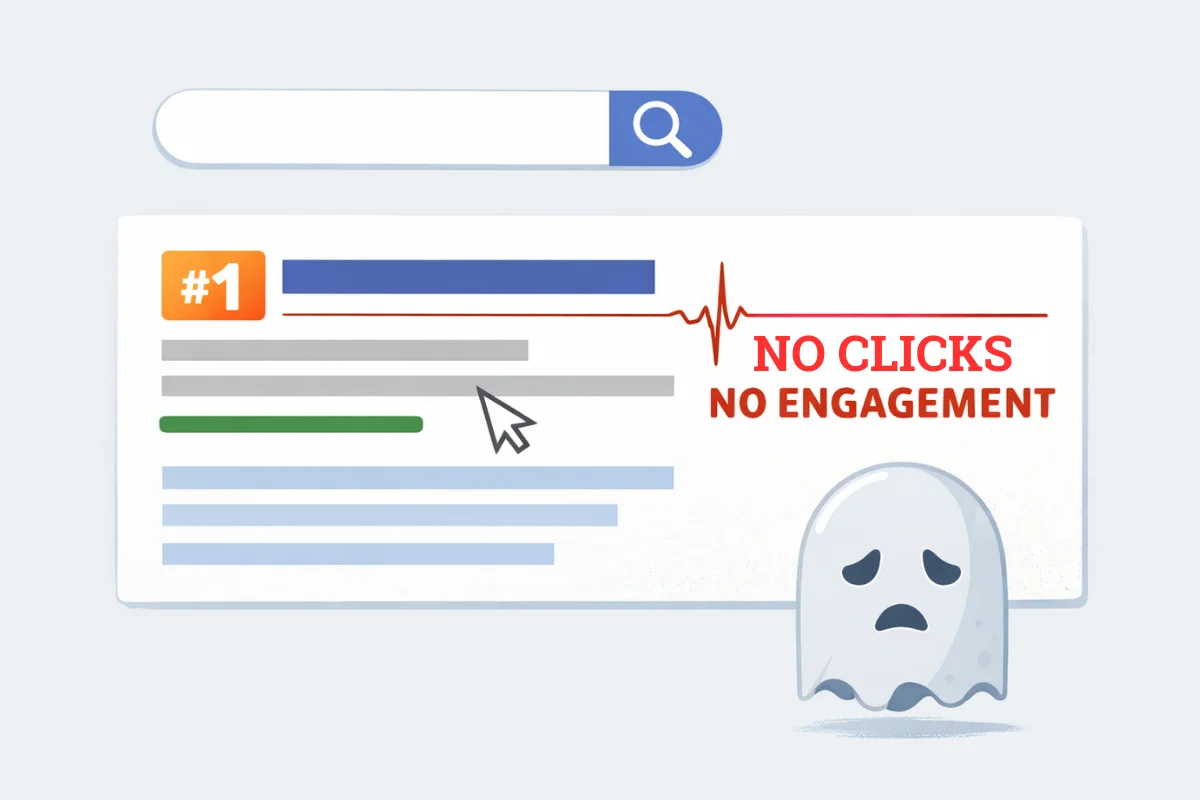
In service-driven markets, ranking #1 does not guarantee attention, trust, or selection. Search results are shaped by layouts, local features, and user behavior that frequently divert clicks away from the top organic position. Contractors may technically rank first while being overlooked at the exact moment a homeowner decides who to contact.
This article explains what contractors get wrong about ranking #1 on Google by separating position from performance. Instead of focusing on how to reach the top spot, it examines what the #1 ranking actually represents, why it often fails to produce jobs, and how search engines determine which contractors are chosen—not just seen.
Table of Contents
What “Ranking #1 on Google” Actually Means for Contractors
Ranking #1 on Google means a contractor’s page is placed first within a specific set of organic results under specific conditions. It does not mean the contractor is the most visible option overall, nor does it mean the contractor will receive the majority of clicks. Search engines rank pages to test relevance, not to guarantee outcomes.
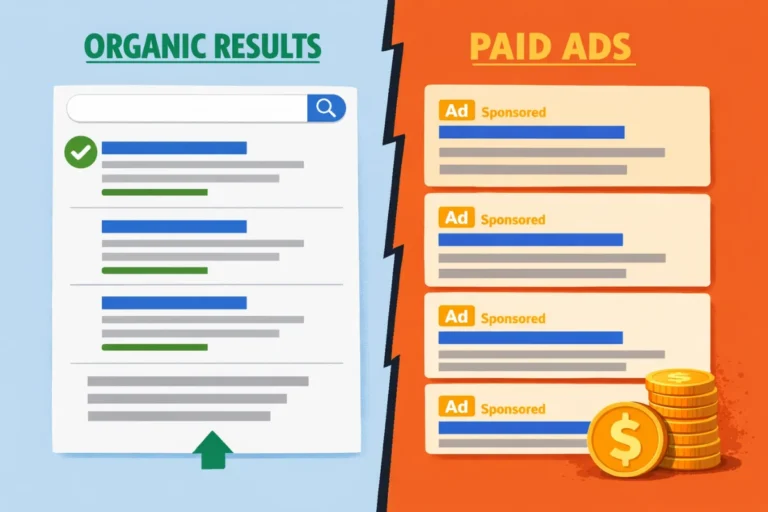
That #1 position exists within a SERP context (search engine results page layout) that often includes ads, local pack listings, map results, images, and business profiles. For contractors, these elements frequently appear above the #1 organic result. As a result, a contractor can technically rank first while being visually displaced by other features that attract attention first.
Ranking #1 is also conditional. It can vary by location, device, and time of day. A contractor may rank #1 from one neighborhood or device and appear lower from another. Search engines personalize results based on proximity and intent signals, which means the #1 position is not a single, fixed reality.
In competitive service markets, the #1 ranking functions as an eligibility signal, not a recommendation. It indicates that the contractor is relevant enough to be considered, but selection depends on what happens next—how the result appears, how trustworthy it feels, and whether it aligns with the homeowner’s immediate need. This is why ranking #1 often fails to deliver the outcomes contractors expect.
Why Ranking #1 on Google Doesn’t Guarantee Contractor Leads
Ranking #1 on Google does not guarantee contractor leads because visibility and selection are evaluated separately. Search engines may place a contractor at the top of organic results, but that position alone does not determine where users click or who they contact. Leads are generated only when visibility aligns with intent, trust, and ease of action.
One reason #1 rankings fail to produce leads is click behavior distortion (users clicking results that feel most actionable, not highest-ranked). Homeowners often gravitate toward listings that offer immediate contact options, clear location cues, or strong credibility indicators. When those elements appear elsewhere on the page, the #1 organic result may be ignored despite its position.
Another factor is intent timing. Some searches trigger exploration rather than immediate hiring, even when they look service-related. A contractor may rank #1 during early research phases, receive impressions, and still see no calls because the searcher is not ready to act. Search engines observe this behavior and treat the ranking as a test rather than a signal of success.
In dense Texas service markets, the decision path is compressed. Homeowners compare multiple contractors quickly and often choose the option that feels most reliable at a glance. Ranking #1 contributes awareness, but it does not replace the need for relevance, credibility, and clear next steps. This is why contractors can hold the top position and still experience little or no lead flow.
How Local Results Change the Meaning of Ranking #1 for Contractors
Local results fundamentally reshape what “ranking #1” means for contractors because they redirect attention away from traditional organic listings. When search engines detect local service intent (queries where proximity and availability matter), they prioritize local results that surface businesses able to respond nearby and quickly. This often places map-based listings and business profiles ahead of the #1 organic result.
For contractors, this means the #1 organic position can sit below local pack results (a cluster of nearby businesses shown with maps, reviews, and call buttons). Homeowners interact with these elements first because they provide immediate context—distance, reputation, and contact options—without requiring further clicks. As a result, the #1 organic ranking may receive fewer interactions than lower-placed local entries.
Local results also personalize visibility. Proximity influences which businesses appear most prominently, and that prominence shifts as the searcher’s location changes. A contractor may rank #1 organically while another business appears closer, more trusted, or more available to the searcher. In these moments, local relevance outweighs position.
This is why contractors can technically “win” the #1 spot and still lose the call. Local results convert intent into action more efficiently by reducing decision friction. When homeowners are choosing who to contact, local context—not organic rank—often determines the outcome.
Why User Behavior Matters More Than the #1 Position on Google
User behavior determines whether ranking #1 has any real value because search engines continuously evaluate how people interact with results. User behavior (what searchers click, skip, return from, or engage with) tells Google which results actually satisfy intent. Position alone does not override these signals.
When a contractor ranks #1 but users hesitate, scroll past, or return to the results page, search engines interpret that as uncertainty. This behavior signals that the result may be relevant, but not compelling enough to solve the user’s problem. Over time, these patterns reduce how often that #1 result is shown in high-intent situations, even if the ranking appears stable.
Behavior also reflects comparison dynamics. Homeowners often open multiple results, assess trust cues, and choose the option that feels safest or fastest. In this process, the #1 result competes with everything else on the page—ads, local listings, reviews, and familiar brands. If another option absorbs attention more effectively, position becomes secondary.
In real contractor searches, especially during urgent moments, users optimize for certainty, not hierarchy. The contractor that reduces doubt most efficiently earns the interaction. This is why search engines reward results that generate confident engagement, not just top placement.
How Trust Signals Override Ranking #1 for Contractors
Trust signals routinely override ranking #1 because contractor decisions involve personal risk, financial commitment, and access to private property. When homeowners evaluate search results, they are not choosing information—they are choosing responsibility. Trust signals (indicators that reduce perceived risk and uncertainty) become the deciding factor long before position does.
Search engines observe this prioritization through behavior. Listings that attract confident actions—calls, direction requests, repeat engagement—are treated as safer recommendations. A contractor may hold the #1 organic position, but if users hesitate or choose another business with stronger validation, search engines infer that trust is lacking at the decision point.
Trust is rarely communicated by rank alone. It is inferred through consistency, reputation cues, and clarity of service identity. In crowded contractor search environments, homeowners often bypass the top result in favor of a business that feels established, familiar, or clearly legitimate. This selection behavior reinforces the idea that ranking is only an entry ticket.
Over time, search engines favor results that resolve doubt quickly. A contractor with slightly lower placement but stronger trust reinforcement will generate more interactions than a #1 result that feels uncertain. This is why ranking #1 does not function as authority—it functions as visibility, which trust must then convert.
Why Ranking #1 Is Unstable in Contractor Search Results
Ranking #1 is unstable for contractors because search engines constantly recalibrate results based on real-time behavior, local context, and competitive response. The top position is not a permanent reward—it is a temporary outcome that persists only while engagement signals remain strong. When conditions change, rankings adjust.
One reason instability is common is context sensitivity. Contractor searches vary by location, device, and urgency. A contractor may appear #1 for one homeowner and #3 for another minutes later. Search engines personalize results to maximize usefulness, which means the #1 position shifts as intent and proximity signals fluctuate.
Another factor is competitive pressure. Contractor markets are dense, and multiple businesses often satisfy the same query. Search engines rotate top placements to test which result performs best under slightly different conditions. Even small changes in user behavior can trigger reordering, making the #1 spot inherently fluid.
This instability is why contractors who chase the #1 position often experience frustration. Holding the top rank briefly does not signal dominance; it signals ongoing evaluation. Search engines reward results that consistently convert attention into confident action, not those that temporarily occupy the highest position. Understanding this volatility helps contractors interpret rankings as dynamic signals rather than fixed achievements.
Why Contractors Overvalue Ranking #1 on Google
Contractors often treat the #1 ranking as a finish line because it is easy to measure and emotionally satisfying. Reports, dashboards, and industry language reinforce the idea that position equals success. In practice, ranking #1 is only a momentary signal within a much larger decision system.
Is ranking #1 on Google enough for contractors?
Ranking #1 on Google is not enough for contractors because it does not control attention, trust, or action. Search results present multiple competing elements, and homeowners choose based on perceived reliability and convenience, not hierarchy alone. The #1 position only guarantees visibility, not selection.
Why do contractors rank #1 on Google but still get few calls?
Contractors can rank #1 and still get few calls when the top position fails to align with urgency or credibility. Homeowners may scroll past the first result if another option feels more certain or immediately actionable. Search engines observe this behavior and adjust exposure accordingly.
How long does ranking #1 on Google last for contractors?
Ranking #1 rarely lasts long for contractors because search engines continuously test alternatives. Engagement, proximity, and competition shift constantly, making the top position temporary. Stability comes from consistent selection behavior, not from holding the first spot.
Should contractors chase ranking #1 on Google?
Chasing ranking #1 often leads contractors to misjudge SEO performance. The top position is a byproduct of usefulness, not a guarantee of it. Contractors who focus only on ranking miss the signals that actually determine whether visibility turns into work.
What Ranking #1 on Google Really Means for Contractors
Ranking #1 on Google represents eligibility, not authority. It signals that a contractor is relevant enough to be considered within a specific context, but it does not determine who will be chosen. Selection happens when intent, trust, and clarity converge at the moment of decision.
For contractors, the frustration around ranking #1 usually comes from expecting position to override human judgment. Search engines do not reward placement; they reward outcomes. When homeowners consistently choose other options, the meaning of the #1 spot fades quickly.
Understanding this distinction reframes SEO performance. Ranking #1 is not the goal—it is a checkpoint within an ongoing evaluation process. When contractors judge SEO by selection instead of position, the behavior of search engines becomes easier to interpret, and results begin to make sense.