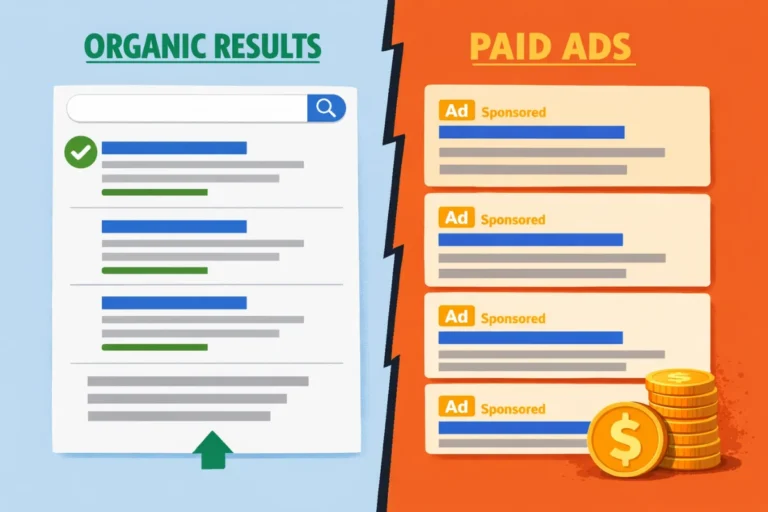


Contractor SEO leads rarely appear the moment rankings improve. Visibility is only the starting point, not the outcome. What ultimately turns search presence into phone calls and booked jobs is how well SEO aligns with search intent, local relevance, and trust at the moment of decision.
In Texas markets such as Dallas, contractors often see impressions, rankings, or traffic increase without a matching rise in calls. This gap creates confusion around whether SEO is working or simply generating noise. The reality is that search engines do not reward visibility in isolation—they reward outcomes that signal real-world usefulness.
This article explains how contractor SEO actually turns into leads, tracing the path from search intent to visibility, trust, and action. Instead of tactics or shortcuts, it focuses on the conditions that cause contractor SEO to produce phone calls and jobs consistently, and why many campaigns fail to make that transition.
Table of Contents
How Does Search Intent Determine Whether Contractor SEO Produces Leads?
Search intent is the deciding factor in whether contractor SEO produces leads or simply visibility. When a homeowner searches, search engines interpret why that search is happening before deciding which results to show. Contractor SEO succeeds when visibility aligns with transactional intent (searches from users ready to hire) rather than informational intent (research or curiosity-based searches).
Many contractor websites receive traffic from searches that look relevant but carry no hiring intent. For example, informational searches may involve cost questions, definitions, or general advice. While these searches increase impressions and visits, they rarely convert into calls. Contractor SEO leads come primarily from searches where the user expects to contact a business immediately.
In competitive markets like Houston, intent alignment becomes even more important. Search engines prioritize businesses that historically satisfy high-intent searches by producing completed actions, such as phone calls or booking requests. When contractor SEO targets visibility without intent alignment, search engines reduce exposure over time, limiting lead generation regardless of traffic volume.
Why Visibility Alone Does Not Create Contractor SEO Leads
Visibility is often mistaken for performance, but in contractor SEO it is only a prerequisite. Appearing in search results does not guarantee that a homeowner will trust the business or take action. Contractor SEO leads are generated only when visibility aligns with urgency, relevance, and confidence.
Search engines frequently test visibility by showing businesses for broader or less specific searches. This exposure may increase impressions (how often a listing appears in search results) without increasing calls. When users see a result but do not engage, search engines interpret that as weak relevance or hesitation, which limits long-term lead potential.
In markets like Austin, contractors may appear consistently in search results yet receive few inquiries. This usually means visibility exists without sufficient alignment to decision-making conditions. Contractor SEO leads emerge only when search presence signals readiness, reliability, and proximity, not simply when a business is seen.
Why Some Contractor SEO Traffic Never Turns Into Leads
Not all SEO traffic is designed to become a lead, even when it appears relevant on the surface. Contractor SEO traffic often includes visitors who are researching, comparing, or exploring options without immediate intent to hire. When this traffic is treated as a success signal, it creates a false expectation that visibility should automatically convert into phone calls or jobs.
One of the most common causes of non-converting traffic is intent mismatch (when the search does not reflect readiness to take action). Search engines may send users to contractor pages for broad or ambiguous queries that sit between research and decision. These users gather information, evaluate options, and leave without contacting a business. This behavior is normal and does not indicate SEO failure.
Another factor is location leakage (traffic coming from outside the true service area). Search engines personalize results based on proximity and context, but reports often aggregate visits without filtering by location relevance. A contractor may receive traffic from nearby regions that are technically visible but practically unreachable, resulting in visits that never turn into leads.
In markets like San Antonio, where service areas overlap and competition is dense, comparison friction also plays a role. Homeowners may click multiple contractor listings, scan credibility signals, and delay action. When a page lacks immediate confirmation of service fit, users return to search results. Search engines observe this behavior and gradually adjust visibility toward businesses that reduce hesitation more effectively.
How Local SEO Turns Contractor Visibility Into Phone Calls
Local SEO is the mechanism that converts contractor visibility into action because it aligns proximity, service relevance, and timing at the moment a homeowner is ready to hire. Unlike broad organic results, local search surfaces businesses that can realistically respond now, which is why phone calls are the most common outcome of successful contractor SEO.
Search engines prioritize local results when they detect service intent tied to location (searches that imply immediate, nearby service needs). This often surfaces contractors through local pack results (the map-based listings shown above organic results) or prominent business listings. These placements shorten the decision path by presenting contact options directly, reducing friction between search and action.
Another reason local SEO drives phone calls is urgency. Contractor searches frequently occur under time pressure—repairs, breakdowns, or safety concerns. In markets like Dallas, homeowners often bypass detailed site exploration and choose the business that appears most relevant, nearby, and credible at a glance. Local SEO concentrates visibility into these high-intent moments, where calling is the fastest next step.
Local SEO also reinforces confidence through contextual signals. When a contractor’s listing clearly communicates service scope, location coverage, and legitimacy, search engines are more likely to present it during urgent searches. This alignment transforms visibility into calls not because of persuasion, but because the result feels immediately actionable.
Why Phone Calls and Form Leads Behave Differently in Contractor SEO
Phone calls and form leads behave differently in contractor SEO because they represent different levels of urgency and commitment. A phone call usually signals immediate intent—something is broken, unsafe, or time-sensitive. A form submission often signals evaluation—homeowners are comparing options, pricing, or availability before deciding.
Search engines recognize this difference through behavior patterns. Call-driven interactions (click-to-call actions from search results or listings) tend to occur during high-intent moments and are strongly associated with local relevance and urgency. Form leads require additional steps, which introduces friction and delay. As a result, SEO visibility that produces calls is often evaluated more favorably than visibility that produces passive inquiries.
Another distinction lies in context. Phone calls frequently originate from local pack listings (map-based results with direct call buttons), where trust and proximity are assessed instantly. Form leads typically originate from organic page visits, where users spend more time evaluating content, credentials, and fit. This makes form conversions more sensitive to comparison and hesitation.
In markets like Austin, this difference explains why contractors may receive steady traffic and occasional form submissions while calls remain inconsistent. Contractor SEO leads skew toward phone calls when visibility aligns with urgency and confidence. When SEO attracts lower-intent traffic, form leads increase but jobs do not. Understanding this distinction helps contractors interpret lead patterns accurately rather than assuming all leads behave the same way.
Why Trust Signals Must Exist Before Contractor SEO Leads Convert
Trust signals determine whether visibility turns into action because contractor decisions involve risk, cost, and urgency. When a homeowner searches for a contractor, they are not just choosing information—they are choosing who to let into their home. Search engines account for this risk by prioritizing businesses that demonstrate reliability before a lead ever occurs.
Trust signals include reputation indicators (reviews, ratings, and consistency across platforms), business legitimacy signals (clear identity, location alignment, and service clarity), and behavioral confirmation (users engaging without hesitation). These signals work together to reduce uncertainty. Without them, even high-intent visibility fails to produce calls or bookings.
Search engines observe how users interact with listings and pages. When users frequently return to search results, skip contact actions, or choose competitors, algorithms infer hesitation. Over time, visibility shifts toward contractors whose presence consistently reassures users. This is why trust must exist before conversion, not after.
In competitive markets like Houston, trust signals often outweigh minor ranking advantages. Contractors with slightly lower positions but stronger credibility receive more calls than higher-ranked competitors with weak validation. Contractor SEO leads convert when trust is already established at the moment of visibility, not when persuasion is attempted afterward.
What Separates Qualified Contractor SEO Leads From Noise
Qualified contractor SEO leads are defined by intent clarity, location fit, and service readiness, not by volume. Noise appears when visibility attracts users who are curious, misaligned, or outside the contractor’s true operating range. Search engines work to reduce this noise by favoring results that consistently satisfy real-world needs.
A qualified lead usually shows intent convergence (the search, the result, and the action all point to the same outcome). This includes searches that imply immediate service, visibility that confirms proximity and capability, and actions that indicate readiness, such as direct calls or specific job-related inquiries. When any part of this chain breaks, leads degrade into noise.
Noise also increases when SEO attracts broad or ambiguous demand. Informational searches, price-only curiosity, or generalized browsing inflate metrics without producing work. Search engines learn from this behavior. Over time, they reduce exposure for results that generate clicks without outcomes, shifting visibility toward contractors whose presence consistently leads to completed actions.
In markets like Dallas, where competition is dense, this separation becomes sharper. Contractors who receive fewer but more aligned leads often outperform those with higher lead counts but lower close rates. Contractor SEO success is not about maximizing visibility—it is about minimizing noise so that the leads generated reflect genuine demand rather than accidental traffic.
Why Contractor SEO Leads Often Feel Inconsistent or Unpredictable
Contractor SEO leads rarely arrive in a smooth, linear pattern. They cluster, pause, surge, and stabilize based on how search engines reassess intent satisfaction, trust, and local competition. What feels unpredictable to contractors is often the result of normal recalibration rather than failure.
Are contractor SEO leads reliable over time?
Contractor SEO leads become reliable only after search engines gain confidence that visibility consistently results in successful outcomes. Early volatility reflects testing, not instability. As intent alignment and trust signals compound, lead flow becomes steadier and less reactive to short-term changes.
Why do contractor SEO leads come in bursts?
Bursts occur when multiple conditions align at once—urgent demand, proximity, and perceived credibility. Search engines surface contractors more aggressively during these moments because user behavior confirms usefulness. These clusters are common in service markets and do not indicate randomness.
Can contractor SEO leads decline even when rankings hold?
Yes. Rankings can remain visible while conversion drops if trust, relevance, or urgency shifts. Search engines monitor engagement and outcomes, not positions alone. When behavior weakens, exposure adjusts—even if reported rankings appear unchanged.
How should contractors judge the quality of contractor SEO leads?
Quality should be judged by alignment, not volume. Leads that match service scope, location, and readiness signal effective SEO. A smaller number of well-matched leads often indicates stronger performance than a larger pool of mismatched inquiries.
What Contractor SEO Leads Really Represent for Texas Businesses
Contractor SEO leads represent moments where search engines are confident enough to connect a homeowner with a business for immediate action. In Texas markets, where competition is localized and urgency is high, that confidence is earned through alignment—not forced through visibility alone.
When contractor SEO works, it reduces friction at the decision point. Phone calls increase because proximity, relevance, and trust converge. Jobs follow because the leads generated are qualified by intent, not inflated by exposure. This is why lead patterns often look uneven early and stabilize later.
Understanding contractor SEO leads through this lens removes confusion. Leads are not rewards for activity; they are outcomes of consistency. When SEO aligns with how search engines evaluate usefulness in real-world conditions, phone calls and jobs stop feeling unpredictable and start reflecting sustained demand.