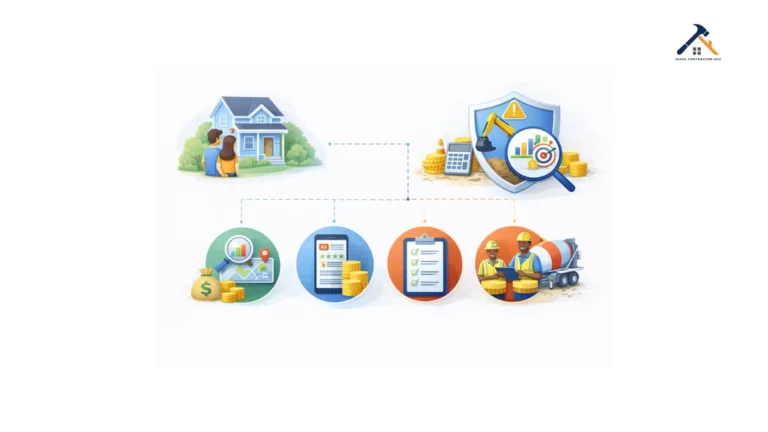


Fence company SEO cost does not follow a flat monthly rate. Pricing varies based on how competitive the local fencing market is, how many service types are being targeted, and how long visibility must be reinforced before lead flow stabilizes. These factors determine workload intensity rather than guaranteeing outcomes.
Some fence companies focus on a single city and a narrow set of residential installations. Others pursue multiple fence materials, repair services, and commercial projects across wider service areas. Each expansion in scope increases competitive pressure and raises the level of ongoing SEO effort required.
This guide analyzes fence SEO cost as a function of competition and time. It explains why pricing tiers exist, how timelines stretch in denser markets, and why fence SEO investment scales with visibility demands rather than keyword count alone.
What typical SEO pricing models apply to fence companies and why?
Fence company SEO pricing typically follows tiered models because workload and competition vary widely by market. Monthly retainers, project-based fees, and hybrid arrangements exist to match the intensity and duration of visibility required rather than a fixed deliverable list.
Monthly retainers are most common because fence SEO requires ongoing reinforcement. Search positions fluctuate as competitors add new projects, reviews, and service pages. Continuous effort is needed to maintain visibility for terms tied to fence installation, repair, and material-specific searches.
Project-based pricing appears in limited-scope situations. These usually involve initial site builds, local listing setup, or content foundations rather than sustained competition management.
Hybrid models combine a base retainer with scoped expansion work. This structure reflects how fence SEO often grows from a single-city focus into broader material coverage or additional service areas.
Pricing models therefore align with market dynamics. The more competitive and expansive the fencing market, the more ongoing effort is required to sustain organic visibility over time.
How do competition and keyword complexity influence fence SEO cost?
Fence SEO cost rises as competition increases because visibility must be defended across more overlapping searches. In fencing markets with many installers, rankings shift frequently as competitors add new projects, reviews, and localized service pages. Maintaining position therefore requires continuous reinforcement rather than one-time effort.
Keyword complexity increases cost by widening the number of competitive fronts. Targeting only basic residential installation terms requires less reinforcement than supporting multiple materials, repair intent, and replacement searches within the same service area.
Residential and commercial fencing keywords also behave differently under competition. Residential fencing searches generate higher volume and faster churn, which increases the cost of defending rankings against many similar installers. Commercial fencing searches appear less frequently but carry higher contract value, shifting SEO cost toward authority and qualification rather than volume defense.
Competition compounds when service intent overlaps. Fence repair, replacement, and new installation keywords attract different buyer behavior and require distinct visibility support. Each additional intent layer increases the effort required to remain consistently visible.
In dense markets, even narrow service areas experience faster ranking decay without sustained reinforcement. In less crowded areas, visibility holds longer with lower ongoing effort. Fence SEO cost therefore scales with competitive pressure and keyword breadth rather than raw search volume.
Why does local versus multi-area keyword targeting change fence SEO cost expectations?
Fence SEO cost rises when targeting expands beyond a single city into multiple service areas. Each additional location increases competitive overlap, page requirements, and reinforcement effort needed to maintain consistent visibility.
Local-only targeting concentrates effort on a small set of installation and repair queries tied to one market. Visibility is reinforced against a limited competitor pool, and ranking signals are easier to stabilize.
Multi-area targeting multiplies competition rather than adding it linearly. Each city introduces new fence companies, reviews, and local signals that must be matched or exceeded to hold position.
Service-area expansion also increases keyword surface area. Material-specific and repair-related searches must perform across multiple locations, raising content and authority requirements.
Fence SEO cost therefore reflects geographic ambition. The broader the coverage, the more sustained effort is required to defend visibility across distinct local markets.
Which SEO components drive the largest fence company expenses?
Fence SEO cost is driven by components that must be reinforced repeatedly in competitive local markets. The largest expenses come from work that directly affects visibility stability rather than from one-time setup tasks.
Content production represents a major cost because fencing demand fragments by material, service type, and location. Fence materials also follow different lifecycle patterns that affect long-term SEO effort. Wood fencing generates recurring repair and replacement demand, requiring continuous content and authority reinforcement. Vinyl fencing is more installation-driven, concentrating competition around fewer but more contested terms. Chain-link fencing overlaps with commercial and utility demand, increasing pressure from non-residential providers.
These lifecycle differences prevent SEO cost from stabilizing evenly across materials. Pages for wood fencing, vinyl fencing, chain-link, repairs, and replacements must remain current as competitors publish new project proof and service coverage.
Local authority signals also contribute heavily to cost. Reviews, citations, and location relevance must be continually supported to prevent ranking erosion as other fence companies add fresh local signals.
Technical maintenance increases cost as coverage expands. As sites grow to support more services and service areas, internal structure, indexing control, and page quality require ongoing management.
Fence SEO expenses remain high because these components never fully complete. Cost reflects the effort required to defend visibility in an environment where competitors constantly reinforce their presence.
How do timeline expectations relate to SEO cost for fencing companies?
Fence SEO cost is closely tied to how long visibility must be reinforced before lead flow becomes consistent. Shorter timelines require higher sustained effort, while longer timelines allow authority and relevance signals to accumulate gradually.
In competitive fencing markets, early gains are fragile. Rankings fluctuate as competitors add new projects, reviews, and localized pages, increasing the work required to stabilize positions over time.
Lower-competition areas reach baseline visibility faster, but still require ongoing reinforcement to prevent decay. SEO cost does not disappear once rankings improve because fencing demand remains contested.
Timeline expectations also expand as service scope increases. Targeting multiple fence materials, repairs, and replacement categories lengthens the time required to achieve steady visibility across all queries.
Competitive fence markets impose a minimum viable SEO workload. Below a certain level of reinforcement, visibility decays faster than it can be recovered as competitors add new signals. This creates a cost floor once meaningful competition exists, regardless of how long a company has been ranking.
Fence SEO cost therefore reflects patience as much as pressure. The shorter the expected timeline to consistent leads, the more intensive the ongoing investment must be to sustain results.
Fence SEO cost reflects competitive visibility requirements, not just keyword volume
Fence SEO cost rises based on how much reinforcement is required to stay visible against active competitors. Keyword volume matters less than how frequently rankings are challenged by new projects, reviews, and service expansion.
Why does fence SEO cost increase even when search volume stays stable?
Fence search demand changes slowly, but competitive activity does not. As more fence companies add fresh project proof and local signals, maintaining position requires additional ongoing reinforcement even if the number of searches remains flat.
How do material-specific fencing searches increase ongoing SEO workload?
Each fence material creates a separate competitive lane. Visibility for wood, vinyl, chain-link, or ornamental fencing must be defended independently, increasing effort without increasing total search volume.
Why do local pack dynamics raise fence SEO cost over time?
Local rankings reshuffle as reviews, proximity signals, and activity change. Sustaining presence requires continuous reinforcement rather than one-time optimization, which raises long-term cost.
How does repair and replacement intent expand fence SEO cost?
Repair and replacement searches introduce additional buyer stages beyond installation. Supporting all intent layers increases the number of pages and signals that must remain competitive.
Why does competitive decay make fence SEO a recurring investment?
Fence SEO positions weaken as competitors add new signals. Without ongoing reinforcement, visibility erodes, making cost recurring rather than episodic.
How fence SEO cost trends reflect long-term demand rather than short-term traffic spikes
Fence SEO cost aligns with persistent local demand rather than temporary surges in search interest. Installation, repair, and replacement needs reappear steadily as properties age, materials wear, and ownership changes, keeping competition active even when traffic volume appears flat.
Over time, this creates a cost structure driven by defense, not discovery. Fence companies invest to maintain visibility against ongoing competitor reinforcement instead of chasing brief demand spikes.
The economics favor sustained presence. As markets mature, cost reflects the effort required to remain consistently visible across materials, services, and locations rather than reacting to short-term fluctuations in search volume.
Fence SEO therefore behaves as a long-horizon investment. Pricing follows the stability of demand and competitive pressure, not the volatility of monthly keyword metrics.