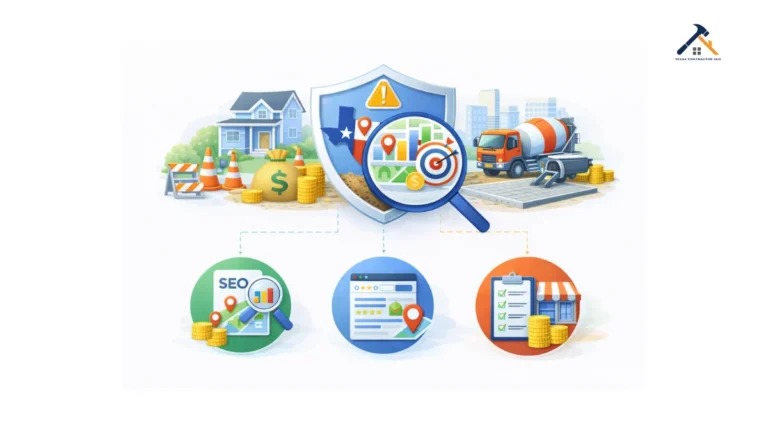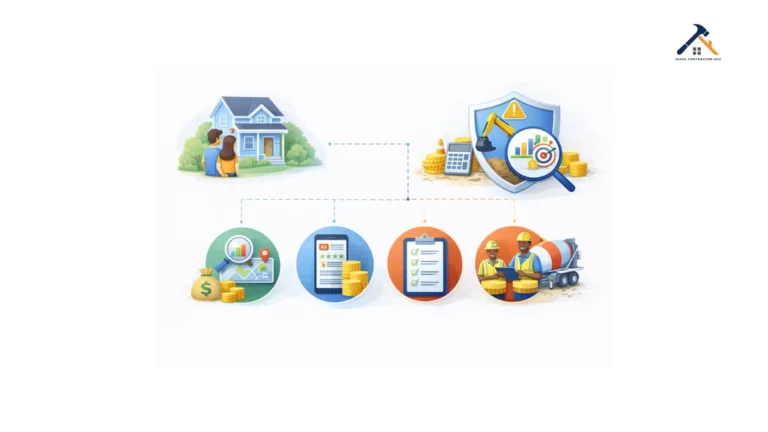


Tree service contractors generate leads through two dominant acquisition systems: search-driven SEO visibility and third-party lead services. Each system produces demand through different mechanisms and introduces distinct cost structures, quality levels, and dependency risks.
SEO leads originate from homeowner-initiated searches and local intent signals, while lead services distribute inquiries generated through centralized platforms and shared marketplaces. The differences between these models become more pronounced in competitive markets such as Dallas, Austin, Houston, and San Antonio, where contractor density and emergency demand intensify competition.
This document compares tree service leads from SEO and lead services by analyzing how each source functions, who owns the lead relationship, how costs behave over time, and how competition affects outcomes in major Texas markets. Each section processes one acquisition dimension to clarify which lead source supports sustainable growth.
What Are the Main Lead Sources for Tree Service Contractors?
Tree service contractors primarily generate leads through organic search visibility, third-party lead services, referrals, and paid advertising. Among these, SEO and lead services represent the most structurally different acquisition models.
SEO-driven leads originate from homeowners actively searching for local tree services using Google Search and Maps. These leads are captured through owned assets such as websites and Google Business Profiles, giving contractors direct control over visibility and messaging.
Lead services generate inquiries through centralized platforms that sell or distribute leads to multiple contractors. These leads are typically shared, time-sensitive, and governed by platform rules rather than contractor-owned systems.
In competitive Texas markets such as Dallas, Austin, Houston, and San Antonio, these differences become more pronounced. Higher contractor density increases lead competition, making ownership, control, and cost behavior critical factors in lead strategy selection.
How Do SEO Leads Work for Tree Service Companies?
SEO leads for tree service companies are generated when homeowners actively search for local or emergency tree services and contact a contractor through organic search results or Google Maps. These leads originate from intent-driven queries rather than paid distribution.
Search visibility depends on local map rankings, organic positioning, and relevance to homeowner problems. Contractors that appear prominently in search results capture demand at the moment service is needed, especially during storm events.
SEO leads are owned, exclusive, and repeatable. Once visibility is established, the same search assets continue generating inquiries without additional per-lead fees. This ownership advantage becomes critical in competitive markets like Dallas, Austin, Houston, and San Antonio, where demand is consistent but competition is high.
Lead quality from SEO is typically higher because homeowners initiate contact after self-qualifying through search, reviews, and website evaluation. This reduces comparison behavior and improves close rates over time.
How Do Lead Services Generate Tree Service Leads?
Lead services generate tree service leads by aggregating homeowner inquiries through centralized platforms and distributing those inquiries to multiple contractors. These platforms capture demand through paid advertising, directory listings, or brand recognition rather than contractor-owned visibility.
Most lead services operate on a shared or semi-exclusive model. The same inquiry is often sent to several tree service companies simultaneously, creating immediate competition and reducing response-time margins.
Lead intent varies widely. Some inquiries come from homeowners needing urgent service, while others originate from price comparison, insurance coordination, or general information requests. Contractors have limited control over how leads are filtered or qualified.
In dense Texas markets such as Dallas, Houston, Austin, and San Antonio, lead services intensify competition because many contractors receive the same leads at the same time. This dynamic increases cost per booked job and reduces conversion efficiency compared to owned SEO leads.
What Is the Difference Between Owned SEO Leads and Rented Lead Service Leads?
Owned SEO leads are generated through contractor-controlled assets, such as websites and Google Business Profiles, while rented lead service leads are distributed through third-party platforms that retain control over demand flow and pricing.
With SEO, the contractor owns visibility, data, and the customer relationship. Leads arrive exclusively, are not resold, and continue to flow as long as search visibility is maintained. This ownership compounds value over time.
Lead service leads are transactional and temporary. Contractors pay per lead or per subscription, compete with other providers for the same inquiry, and lose access immediately when payments stop.
In competitive Texas metros like Dallas, Austin, Houston, and San Antonio, this distinction becomes critical. High contractor density amplifies competition for rented leads, while owned SEO leads provide insulation from platform pricing and sharing dynamics.
Which Lead Source Produces Higher-Quality Tree Service Leads?
SEO produces higher-quality tree service leads because they originate from homeowner-initiated searches with clear intent and local relevance. These leads are typically generated after the homeowner evaluates services, reviews, and proximity before making contact.
SEO leads convert efficiently because the homeowner has already self-qualified. By the time contact occurs, urgency, service need, and location alignment are established, reducing sales friction.
Lead service quality varies widely. Some inquiries are urgent, but many are price-driven, duplicated, or submitted to multiple contractors at once. This increases competition and lowers close rates, especially in dense markets.
In Texas cities such as Dallas, Austin, Houston, and San Antonio, higher population density and contractor volume amplify this difference. SEO leads remain exclusive, while lead service inquiries are distributed broadly, reducing average lead quality.
How Do Lead Costs Compare Between SEO and Lead Services?
Lead costs differ significantly between SEO and lead services because SEO operates on a compounding investment model, while lead services operate on a per-lead or subscription-based cost model.
SEO requires upfront and ongoing investment in content, local optimization, and authority building. Early-stage costs are higher, but cost per lead decreases over time as visibility stabilizes and organic demand compounds.
Lead services charge recurring fees for each inquiry or fixed monthly access. Costs remain constant or increase as competition rises, and there is no residual value once payments stop.
In competitive Texas markets such as Dallas, Austin, Houston, and San Antonio, lead service prices rise faster due to contractor density. SEO leads become more cost-efficient over time, while lead service costs remain volatile and tied to platform pricing.
How Does Competition Affect Tree Service Leads in Major Texas Cities?
Competition directly affects tree service lead volume, cost, and conversion efficiency in major Texas cities such as Dallas, Austin, Houston, and San Antonio. Higher contractor density increases bidding pressure, response-time competition, and lead dilution across all acquisition channels.
In large metro areas, lead services intensify competition by distributing the same inquiry to multiple contractors simultaneously. This reduces exclusivity, increases speed-to-call pressure, and lowers close rates as homeowners receive multiple quotes within minutes.
SEO behaves differently under competition. While ranking difficulty increases in dense markets, once visibility is achieved, lead exclusivity remains intact. Contractors do not compete for the same inbound inquiry, which stabilizes conversion rates even as market density rises.
Urban Texas markets also experience event-driven demand spikes from storms and seasonal weather. During these periods, competitive imbalance becomes more pronounced, favoring contractors with established local search visibility over those dependent on shared lead platforms.
Which Lead Source Scales Better for Tree Service Growth?
SEO scales more effectively for tree service growth because it is not constrained by per-lead fees or shared distribution models. Once local visibility is established, additional demand can be captured without proportional increases in acquisition cost.
SEO supports geographic expansion and service diversification. Tree service contractors can scale by adding location pages, emergency service coverage, and specialized offerings without re-entering competitive bidding environments.
Lead services scale poorly. Increasing volume requires purchasing more leads or higher-tier subscriptions, which exposes contractors to rising costs, increased competition, and diminishing conversion efficiency as markets become saturated.
In fast-growing Texas metros such as Austin and Dallas, scalability becomes critical. SEO enables long-term growth with controlled cost behavior, while lead services introduce structural limits tied to platform pricing and availability.
How Should Tree Service Contractors Balance SEO and Lead Services?
Tree service contractors balance SEO and lead services by using SEO as the primary, owned demand engine and lead services as a short-term or supplemental channel. This balance reduces dependency risk while maintaining flexibility.
SEO provides stable, exclusive lead flow over time. It builds brand presence, review authority, and local trust, which improves conversion rates and supports consistent growth.
Lead services can be used strategically for market entry, seasonal coverage, or temporary demand gaps. However, reliance should be limited due to shared lead competition and recurring costs.
In Texas markets like Houston, San Antonio, Dallas, and Austin, contractors with strong SEO foundations are better positioned to withstand competitive pressure and storm-driven volatility than those dependent on rented leads.
Market and platform dynamics that shape tree service lead quality
Tree service lead quality is shaped by how demand is created, distributed, and controlled across acquisition systems. Platform rules, market density, and emergency-driven demand explain why SEO and lead services produce different outcomes for tree service contractors, especially in competitive Texas metros.
Are Lead Services Reliable in Competitive Markets Like Dallas or Houston?
Lead services become less reliable in highly competitive markets because multiple contractors receive the same inquiry simultaneously. In cities like Dallas and Houston, this leads to rapid price competition, reduced exclusivity, and lower close rates despite higher inquiry volume.
Do SEO Leads Take Longer Than Lead Service Leads?
SEO leads take longer to develop because they rely on building visibility, authority, and local trust signals. However, once established, SEO produces consistent and exclusive leads that are not affected by platform pricing or shared distribution dynamics.
Can Small Tree Services Compete With Lead Services Using SEO?
Small tree service companies can compete effectively with SEO by focusing on limited service areas, review acquisition, and clear service relevance. SEO allows smaller operators to avoid shared lead competition and build visibility without purchasing volume-based access.
Do Lead Services Work Better for Emergency Tree Jobs?
Lead services can surface emergency inquiries, but performance declines during high-demand events. Shared distribution and delayed response increase competition, while contractors with strong local SEO often capture emergency demand more efficiently through direct calls.
What Happens When Tree Services Stop Paying for Lead Services?
When payments stop, lead flow ends immediately because visibility and demand are controlled by the platform. No residual authority, brand recognition, or organic demand remains, creating a dependency risk not present with owned SEO-driven acquisition systems.
How tree service lead sources should be interpreted over time
Tree service leads generated through SEO and lead services differ because they originate from fundamentally different demand systems. SEO captures homeowner-initiated intent through owned visibility, while lead services redistribute demand through shared platforms that retain control over access and pricing.
SEO-driven tree service leads tend to stabilize over time because contractors own the relationship, visibility, and data. As authority and local trust accumulate, lead quality and conversion efficiency remain consistent even as competition increases. Lead services, by contrast, introduce ongoing volatility through shared distribution, rising costs, and dependency on platform rules.
In competitive Texas markets such as Dallas, Austin, Houston, and San Antonio, these differences become more pronounced. Contractor density amplifies the disadvantages of shared leads while increasing the long-term value of owned SEO visibility. Interpreted correctly, lead performance reflects ownership and control, not short-term volume.
Tree service contractors that evaluate lead sources through this lens can understand why SEO supports sustainable growth, while lead services function as temporary access to rented demand rather than a durable acquisition system.