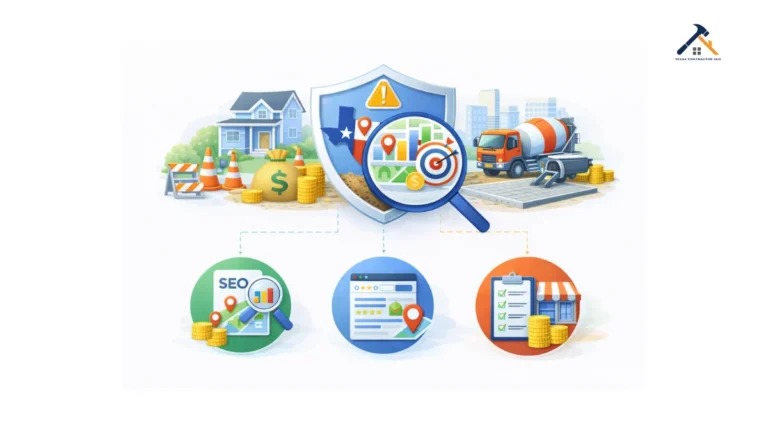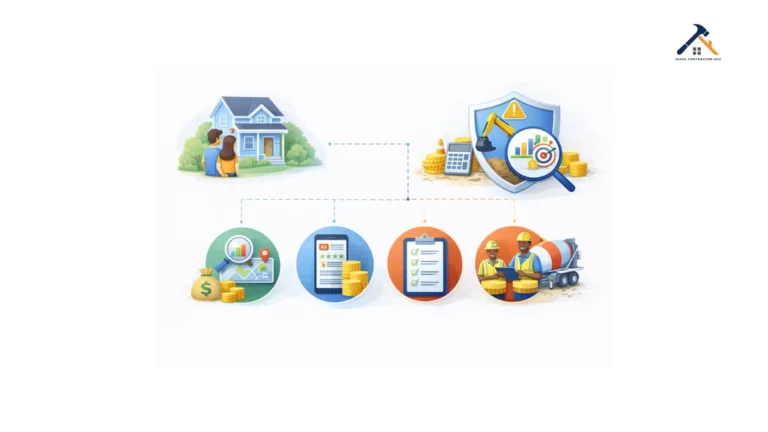
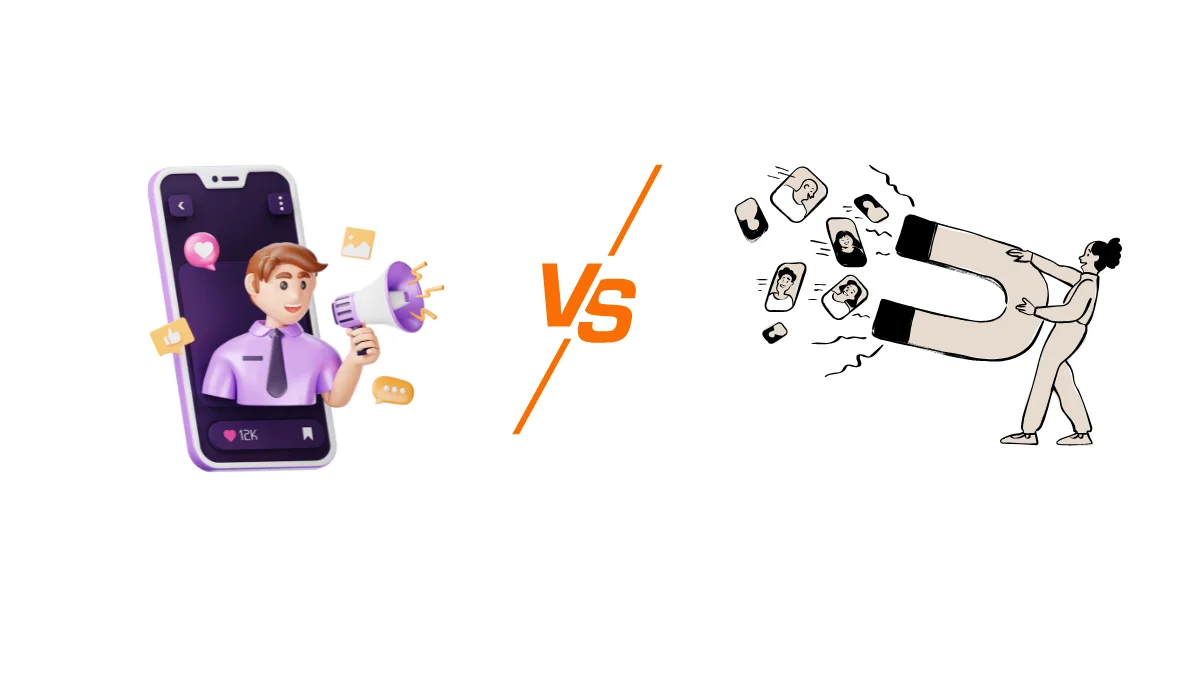

Roofing companies acquire customers through two fundamentally different systems: search-driven SEO visibility and third-party lead aggregators. Each system produces demand through distinct mechanisms, introduces different cost structures, and carries different long-term risks.
SEO generates leads from homeowner-initiated searches captured through owned assets such as websites and local map visibility. Lead aggregators distribute inquiries generated on centralized platforms, often selling the same lead to multiple contractors at the same time. These differences become more pronounced in competitive Texas markets like Dallas, Houston, Austin, and San Antonio, where contractor density and storm cycles intensify competition.
This document compares SEO and lead aggregators for roofing companies by analyzing how each model generates leads, who owns the customer relationship, how costs behave over time, and how competition affects outcomes. Each section isolates a structural difference to clarify which approach supports sustainable growth versus short-term volume.
Table of Contents
What Are the Main Lead Acquisition Models for Roofing Companies?
Roofing companies acquire leads through owned demand channels and rented demand channels. The primary owned model is SEO, while the primary rented model is lead aggregation. Each model determines who controls visibility, cost behavior, and the customer relationship.
SEO-based acquisition captures homeowner-initiated demand from Google Search and local map results. Leads arrive directly through a company’s website or local listing, making them exclusive and repeatable once visibility is established.
Lead aggregators collect homeowner inquiries on centralized platforms and distribute those inquiries to multiple roofing companies. Access is governed by fees, lead credits, or subscriptions, and exclusivity is limited or absent.
In competitive Texas markets such as Dallas, Houston, Austin, and San Antonio, the distinction between owned and rented acquisition becomes critical. Higher contractor density amplifies competition for aggregated leads, while SEO rewards sustained authority and local trust.
How Does SEO Generate Roofing Leads?
SEO generates roofing leads by capturing active homeowner demand at the moment a service decision is being made. Homeowners search for roof repair, replacement, inspections, or emergency services, and SEO positions a roofing company’s website and local listing to appear for those searches.
Leads produced through SEO come from Google Search and Google Maps visibility, where homeowners evaluate proximity, reviews, and service relevance before initiating contact. This evaluation happens before the call, which increases lead quality and intent alignment.
In competitive cities like Dallas, Houston, Austin, and San Antonio, SEO effectiveness depends on accumulated authority. Rankings improve as Google observes consistent relevance, local engagement, and trust signals over time.
SEO leads are exclusive by default. Homeowners contact a specific roofing company they chose, not a list of contractors receiving the same inquiry. This exclusivity improves close rates and reduces price-based competition.
How Do Lead Aggregators Generate Roofing Leads?
Lead aggregators generate roofing leads by attracting homeowner inquiries on centralized platforms and then distributing those inquiries to participating contractors. Homeowners submit a request for service, and the platform sells or assigns that request to multiple roofing companies.
These platforms control visibility, pricing, and distribution rules. Contractors gain access by paying per lead, per month, or through credit-based systems, but they do not control how many competitors receive the same inquiry.
In competitive Texas markets such as Dallas, Houston, Austin, and San Antonio, aggregated leads are often shared simultaneously. Homeowners may receive calls from several contractors within minutes, increasing competition and reducing conversion probability.
Lead aggregators generate volume quickly, but lead quality varies because intent is filtered after submission, not before. Contractors must compete on response speed and pricing rather than pre-established trust.
What Is the Difference Between Owned SEO Leads and Aggregated Leads?
The difference between owned SEO leads and aggregated leads lies in control, exclusivity, and durability. SEO leads are generated through assets a roofing company owns, while aggregated leads are rented through third-party platforms.
Owned SEO leads originate when homeowners choose a specific roofing company after evaluating search results, reviews, and local presence. The relationship begins directly between homeowner and contractor, without intermediaries or shared competition.
Aggregated leads are distributed by platforms that control pricing and access. The same inquiry is often sent to multiple contractors, which compresses decision time and shifts competition toward price and speed rather than credibility.
In competitive cities like Dallas, Houston, Austin, and San Antonio, these differences compound. SEO strengthens over time and reduces dependency, while aggregated leads remain transactional and stop immediately when payments end.
Which Model Produces Higher-Quality Roofing Leads?
SEO produces higher-quality roofing leads because intent is validated before contact occurs. Homeowners discover a roofing company through search results, reviews, and local presence, then choose to initiate contact based on perceived trust and relevance.
SEO leads typically involve single-company outreach. Homeowners are not comparing prices in real time with multiple contractors, which improves conversation quality and close rates.
Lead aggregator inquiries are lower in quality because intent is distributed, not exclusive. Homeowners often submit one request that is shared with several contractors, leading to rushed decisions, price shopping, or disengagement after the first response.
In competitive Texas markets such as Dallas, Houston, Austin, and San Antonio, quality differences are amplified. Aggregated leads degrade faster as contractor density increases, while SEO leads remain insulated from volume-based competition.
How Do Lead Costs Compare Between SEO and Lead Aggregators?
Lead costs differ structurally between SEO and lead aggregators because SEO costs compound over time, while aggregated lead costs remain variable and transaction-based. The pricing logic behind each model determines long-term efficiency.
SEO requires upfront and ongoing investment, but cost per lead decreases as rankings, local visibility, and brand recognition strengthen. Once authority is established, additional leads are generated without proportional increases in spend.
Lead aggregators charge per lead or per subscription, and costs reset continuously. In competitive markets like Dallas, Houston, Austin, and San Antonio, pricing often increases during high-demand periods, while lead quality declines due to oversaturation.
Over time, SEO stabilizes acquisition costs, while aggregated leads introduce cost volatility and margin pressure, especially during storm cycles and peak competition.
How Does Competition Affect Aggregated Leads in Roofing Markets?
Competition affects aggregated leads by reducing exclusivity and increasing response pressure. As more roofing companies buy access to the same platforms, each individual lead is distributed to a larger pool of contractors.
In competitive cities such as Dallas, Houston, Austin, and San Antonio, aggregated leads are often sent to three to six contractors simultaneously. Homeowners receive multiple calls within minutes, which shortens decision windows and encourages price-based selection.
As competition intensifies, conversion rates decline. Contractors must respond faster, discount services, or absorb higher no-close rates to remain competitive within the platform ecosystem.
This dynamic favors volume-driven operators rather than quality-driven businesses. Aggregated lead performance degrades as markets mature, while SEO-driven leads remain insulated from shared competition.
Which Lead Model Is More Sustainable for Roofing Companies?
SEO is the more sustainable lead model for roofing companies because it builds owned visibility, brand equity, and local authority that persist over time. Once rankings and map presence are established, leads continue without proportional increases in cost.
Lead aggregators are inherently short-term and transactional. Lead flow exists only while payments continue, and performance declines as more contractors enter the same marketplaces. Sustainability is limited by platform rules, pricing changes, and shared competition.
In competitive Texas markets such as Dallas, Houston, Austin, and San Antonio, sustainability favors models that reduce dependency. SEO strengthens with age and engagement, while aggregated leads reset each billing cycle.
Long-term growth requires demand channels that compound rather than expire. SEO aligns with this requirement; lead aggregators do not.
How Should Roofing Companies Balance SEO and Lead Aggregators?
Roofing companies should treat SEO as the primary growth foundation and lead aggregators as supplementary volume sources. SEO establishes stable demand, while aggregators can fill short-term gaps during ramp-up or seasonal fluctuations.
In early stages, aggregators may provide immediate inquiries while SEO authority develops. As SEO performance improves, dependency on aggregated leads should decline to protect margins and reduce volatility.
In dense markets like Dallas, Houston, Austin, and San Antonio, balance is achieved by prioritizing owned channels and limiting rented exposure. This approach maintains flexibility without surrendering control of lead acquisition.
How ownership and competition dynamics shape roofing lead outcomes over time
Roofing lead outcomes are shaped by who controls visibility, how competition is structured, and whether demand is owned or rented. These dynamics determine lead exclusivity, cost behavior, and long-term risk, especially in competitive markets where multiple contractors compete for the same homeowners through shared platforms or search results.
Are Roofing Lead Aggregators Reliable in Competitive Cities?
Lead aggregators are less reliable in competitive cities because lead sharing increases and response competition intensifies. Reliability declines as more contractors compete for the same inquiries.
Do SEO Leads Take Longer Than Aggregated Leads?
Yes. SEO leads take longer to materialize because authority must be established. However, once active, SEO produces more consistent and higher-quality leads without per-lead fees.
Can Small Roofing Companies Compete Without Lead Aggregators?
Yes. Small roofing companies can compete by focusing on local SEO, reviews, and service clarity. SEO reduces reliance on large advertising budgets required to compete in aggregated marketplaces.
Do Lead Aggregators Work Better During Storm Season?
Yes. Aggregated leads often spike during storm season due to increased demand. However, competition and cost also increase, limiting profitability for many contractors.
What Happens When Roofing Companies Stop Paying Lead Aggregators?
When payments stop, lead flow ends immediately. No residual visibility, authority, or demand remains, unlike SEO, which continues producing leads after initial investment.
How SEO and lead aggregators diverge as long-term acquisition systems
SEO and lead aggregators represent structurally different acquisition systems with opposing long-term effects. SEO builds owned visibility and direct homeowner relationships, allowing demand to compound as authority and trust accumulate. Lead aggregators distribute demand through controlled platforms, where access, pricing, and exclusivity remain outside the contractor’s control.
As competition increases, aggregated leads degrade due to sharing, response pressure, and rising costs. SEO, by contrast, strengthens over time, insulating lead quality from volume-based competition and reducing dependency on third-party rules or pricing changes.
Viewed across competitive markets, the distinction is not about short-term volume but about control and durability. SEO functions as a compounding asset that stabilizes growth, while lead aggregators operate as transactional channels that reset with each billing cycle, introducing ongoing risk and volatility.