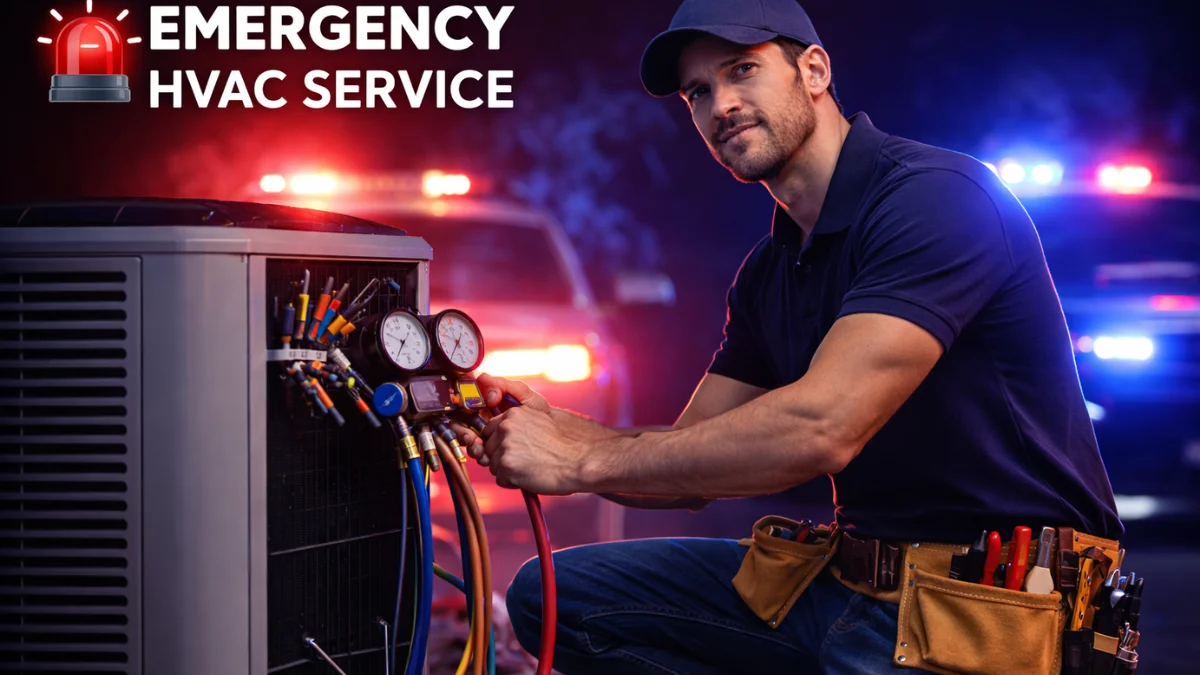

Emergency HVAC keywords convert because they reflect immediate system failure and homeowner urgency, not routine maintenance or future planning. When heating or cooling stops working, homeowners search with the intent to act quickly, often within minutes.
These searches follow clear patterns. Some describe symptoms like loss of cooling or heating, while others explicitly demand availability through phrases such as emergency, same-day, or 24-hour service. Each variation signals a different stage of urgency, but all share one trait: the homeowner is ready to contact a service provider.
This article explains which emergency HVAC keywords actually convert, how homeowners search during HVAC failures, and why certain phrases consistently lead to calls instead of clicks. Each section answers a specific search-driven question, mapping urgency, intent, and language without speculation or generic keyword lists.
What Makes an HVAC Keyword an Emergency Keyword?
An HVAC keyword becomes an emergency keyword when it signals immediate discomfort, system failure, or risk, not general interest or routine service. These searches indicate that the homeowner cannot wait and is actively seeking help now.
Emergency intent is defined by three elements: urgency, severity, and time sensitivity. Words like emergency, 24 hour, same day, or now explicitly communicate urgency, while symptom-based phrases such as AC not cooling or heater not working imply severity even when the word “emergency” is not used.
Context matters as much as wording. When these keywords are paired with location modifiers—near me, city names, or neighborhoods—they reflect readiness to contact a local provider immediately. The homeowner is no longer researching options but attempting to resolve a problem.
Emergency HVAC keywords differ from standard service keywords because they represent resolved intent. The decision to seek service has already been made; the remaining question is who can respond fastest and most reliably.
Which Emergency HVAC Keywords Lead to Immediate Service Calls?
Emergency HVAC keywords that lead to immediate service calls are those that combine clear urgency with an expectation of availability. These searches leave little ambiguity about intent and typically result in phone calls rather than form submissions.
Keywords containing phrases such as emergency repair, 24 hour service, same day service, or after hours HVAC signal that the homeowner expects an immediate response. These users are not comparing providers broadly; they are looking for confirmation that someone can help right now.
Symptom-driven keywords also convert strongly when the problem implies failure. Searches like AC not cooling, furnace won’t turn on, heater blowing cold air, or HVAC leaking water often precede explicit emergency searches. When the system failure affects comfort or safety, homeowners move quickly from diagnosis to action.
The highest-converting emergency keywords are typically short, direct, and location-aware. When urgency language and local intent appear together, the likelihood of a service call increases significantly because the homeowner perceives both availability and proximity.
How Do Homeowners Phrase Emergency HVAC Searches During System Failures?
Homeowners phrase emergency HVAC searches based on what they are experiencing in the moment, not on technical terminology. Their language reflects stress, discomfort, and the need for quick resolution rather than precision.
When a system first fails, searches are often descriptive. Homeowners type what they notice, such as AC not blowing cold air, heater stopped working, or air conditioner making loud noise. These phrases are attempts to confirm that the issue is serious and requires professional help.
As urgency increases, search phrasing becomes directive and time-based. Queries shift toward phrases like emergency AC repair near me, 24 hour HVAC service, or same day furnace repair. At this stage, the homeowner is no longer diagnosing; they are seeking immediate availability.
In the final stage, searches include confirmation language. Homeowners may look for emergency HVAC repair cost, how fast can HVAC repair arrive, or after hours AC service reviews. These searches reflect readiness to call once response time and reliability are validated.
Why Do Emergency HVAC Keywords Convert at a Higher Rate Than Regular HVAC Keywords?
Emergency HVAC keywords convert at a higher rate because the homeowner’s decision is already made before the search occurs. Unlike regular HVAC searches, there is no exploratory or comparison phase driving the query.
Regular HVAC keywords are often used during planning or evaluation. Homeowners search for maintenance, replacement options, or pricing benchmarks without immediate pressure. Emergency keywords, however, appear when comfort, safety, or livability is disrupted.
Urgency compresses the decision window. When heating or cooling fails, homeowners prioritize speed, availability, and reliability over extended research. This shifts behavior toward phone calls and immediate contact rather than browsing multiple pages.
Because emergency keywords reflect resolved intent, they remove many friction points found in standard HVAC searches. The homeowner is not asking whether to hire a professional, but who can respond now. This is why these keywords consistently produce higher call and booking rates.
How Does Location Influence Emergency HVAC Keyword Behavior?
Location plays a critical role in emergency HVAC searches because homeowners expect fast, local response, not general service availability. As urgency increases, search behavior narrows geographically.
Emergency queries frequently include near me, city names, neighborhoods, or ZIP codes. This signals that the homeowner is filtering results based on proximity and perceived response time. A provider that appears locally relevant is assumed to arrive faster.
Local context also shapes urgency. Climate conditions, seasonal extremes, and housing density influence how quickly homeowners escalate searches from symptom-based phrases to emergency service terms. In hotter or colder regions, emergency intent escalates more rapidly.
Emergency HVAC keywords convert best when they align urgency with locality. The homeowner’s priority is not broad expertise but immediate, nearby help. Location modifiers reduce uncertainty and increase confidence that service can be delivered promptly.
When Do Homeowners Switch From Research to Emergency HVAC Searches?
Homeowners switch from research to emergency HVAC searches when discomfort, safety concerns, or system failure cross a personal threshold. This transition happens quickly once the problem interferes with daily living.
Initial searches often focus on understanding the issue. Homeowners may look up symptoms or simple explanations to determine whether the problem is minor. As soon as it becomes clear that cooling or heating cannot be restored easily, search behavior escalates.
The switch to emergency phrasing typically occurs when time becomes a factor. Rising indoor temperatures, extreme weather, or complete system shutdowns remove the option to wait. At this point, search terms shift toward immediate service language.
This transition marks a change in intent. The homeowner is no longer gathering information but seeking action. Emergency HVAC keywords appear precisely at this moment, reflecting readiness to contact a professional without further delay.
What Information Do Homeowners Expect to See When Searching Emergency HVAC Keywords?
When homeowners search emergency HVAC keywords, they expect confirmation, reassurance, and immediacy, not detailed explanations or long-form education. The purpose of the search is to verify that help is available now.
The first expectation is availability. Homeowners want to know whether emergency service is offered, whether it is truly 24/7 or same-day, and how quickly a technician can arrive. Clear signals about response time reduce hesitation.
The second expectation is local legitimacy. Homeowners look for indicators that the provider serves their area and is accustomed to handling urgent situations nearby. Familiar geographic references increase trust during high-stress moments.
The final expectation is credibility under pressure. Reviews, experience, and clarity of service reassure homeowners that the emergency will be handled professionally. When these expectations are met quickly, emergency searches turn into service calls rather than continued browsing.
How Do Emergency HVAC Keywords Differ by Season?
Emergency HVAC keywords change by season because system failures are triggered by weather extremes, not by homeowner planning. As temperatures shift, the language homeowners use during emergencies shifts with them.
During hot months, emergency searches focus on cooling failure. Keywords reference loss of cooling, rising indoor temperatures, and immediate relief. Phrases related to air conditioners not cooling, blowing warm air, or shutting down dominate emergency demand.
During colder months, emergency intent pivots to heating failure. Searches reference furnaces not starting, heaters blowing cold air, or complete system outages. Safety concerns increase urgency, especially when low temperatures affect livability.
Seasonal variation does not change emergency behavior—it changes which system is failing. Emergency HVAC keywords always reflect the same underlying intent: rapid resolution of a critical comfort problem caused by environmental conditions.
Why Do Emergency HVAC Keywords Lead to Calls Instead of Form Submissions?
Emergency HVAC keywords lead to calls instead of form submissions because homeowners need immediate confirmation, not delayed responses. During an HVAC failure, waiting for a callback introduces uncertainty that most homeowners will not tolerate.
Phone calls provide real-time reassurance. Speaking to a person confirms availability, response time, and next steps instantly. This interaction reduces stress and allows homeowners to feel that the problem is actively being handled.
Forms, by contrast, imply delay. Even short forms suggest waiting, which conflicts with the urgency driving emergency searches. Homeowners may abandon forms if a phone number is not clearly visible or if response timing is unclear.
Emergency HVAC keywords reflect a desire for direct human contact. Calls align with this intent, making them the dominant conversion action when systems fail and immediate service is required.
How do homeowner behavior patterns influence foundation repair lead reliability over time?
Foundation repair lead reliability is shaped by how homeowners perceive risk, delay action, and seek validation before committing to high-ticket structural work. These behavioral patterns influence when leads appear, how consistently they convert, and why some channels perform unevenly despite strong visibility.
Are Symptom-Based HVAC Keywords Considered Emergency Searches?
Yes. Symptom-based searches often act as early emergency signals. When issues affect comfort or safety, these searches quickly escalate into emergency intent, especially if basic troubleshooting fails.
Do Emergency HVAC Keywords Always Include the Word “Emergency”?
No. Many high-converting emergency searches never use the word “emergency.” Phrases describing system failure or loss of heating or cooling often indicate the same urgency.
How Quickly Do Emergency HVAC Searches Turn Into Calls?
Emergency HVAC searches usually convert within minutes. Homeowners often call the first provider that clearly confirms availability, location coverage, and immediate response.
Do Emergency HVAC Keywords Work Better on Mobile Devices?
Yes. Most emergency HVAC searches occur on mobile devices because homeowners search while experiencing the problem and want immediate contact options.
Are Emergency HVAC Keywords More Price Sensitive?
Emergency searches are generally less price sensitive. Homeowners prioritize speed and reliability over detailed cost comparisons when immediate comfort or safety is at risk.
Why Emergency HVAC Keywords Work
Emergency HVAC keywords convert because they mirror real homeowner behavior during system failures, not planned service research. These searches appear when comfort or safety is disrupted and action must be taken immediately.
Homeowners move quickly from symptom recognition to urgent service queries, using language that prioritizes availability, proximity, and response speed. Keywords that reflect this urgency consistently lead to calls rather than extended browsing or delayed inquiries.
Understanding how emergency HVAC keywords function allows businesses to align content with intent instead of guessing at phrasing. When search language, urgency, and expectations are matched correctly, emergency HVAC searches naturally translate into real service calls and booked jobs.