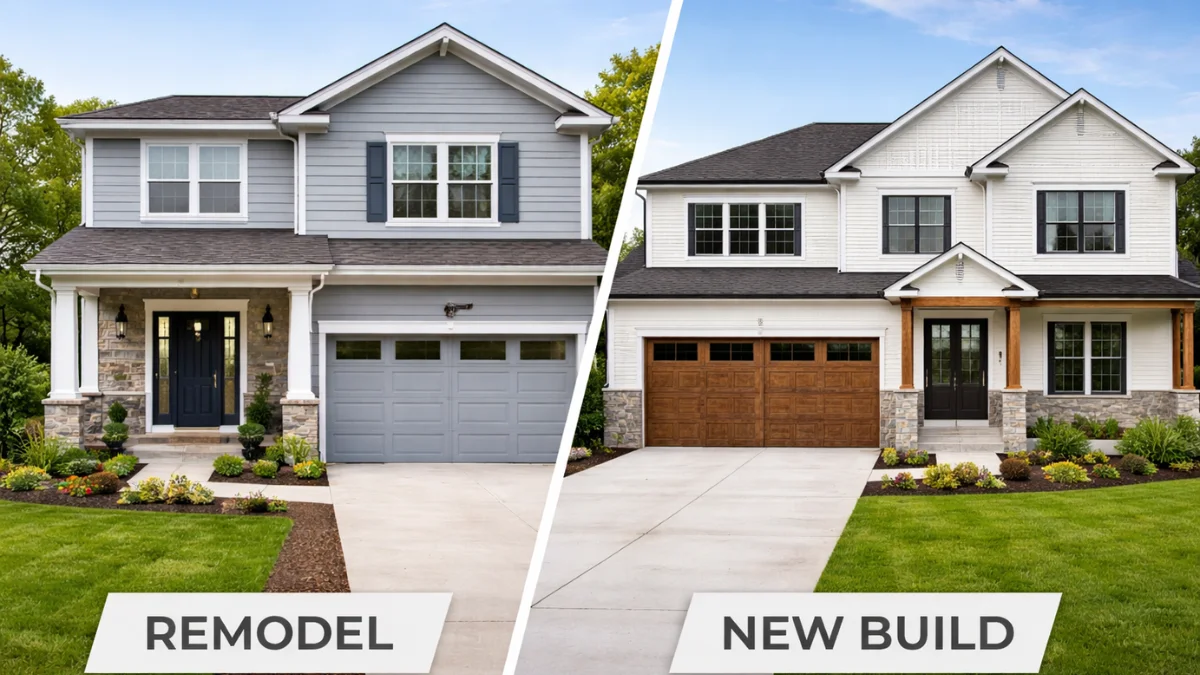

General contractor SEO differs significantly between remodeling services and new construction projects because homeowner behavior, search intent, and decision timelines are not the same. These differences affect how visibility is earned, evaluated, and sustained in search results.
Remodeling searches are often problem-driven and time-sensitive, while new build searches are longer, research-heavy, and process-oriented. As a result, keyword selection, content structure, local targeting, and trust signals vary between the two service types.
This article explains how SEO strategies for general contractors diverge between remodel and new build work, focusing on intent patterns, keyword strategy, content needs, local visibility considerations, and buyer journey differences that shape search performance.
How does SEO for general contractors differ between remodeling services and new build projects?
SEO for general contractors differs between remodeling and new build projects because search intent, decision timelines, and evaluation criteria are structurally different. These differences determine how relevance, authority, and engagement signals are established in search results.
Remodeling SEO aligns with problem-driven searches tied to upgrades, repairs, or space changes. Queries often indicate urgency or near-term decision-making, favoring clear service definitions, localized relevance, and fast access to contact or estimate information.
New build SEO targets research-oriented searches focused on planning, process understanding, and long-term investment decisions. Visibility depends more on comprehensive explanations, project portfolios, credentials, and evidence of capability across complex build phases.
Because these service types attract different buyer behaviors, effective SEO structures content, keywords, and local signals differently. Contractors offering both services must segment visibility rather than relying on a single generalized SEO approach.
What search intent patterns do homeowners show for remodeling vs new build queries?
Homeowner search intent differs sharply between remodeling and new build queries due to urgency, planning depth, and decision timelines. These intent patterns shape how queries are phrased and which results receive engagement.
Remodeling searches are typically problem- or improvement-driven. Queries often focus on specific rooms, systems, or issues and indicate near-term action. This intent favors results that clearly address scope, timelines, and next steps.
New build searches reflect exploratory and evaluative intent. Homeowners research processes, costs, design considerations, and builder qualifications long before contacting a contractor. Engagement favors detailed explanations and credibility signals over immediate conversion paths.
Because intent maturity differs, search behavior produces different ranking pressures. SEO that matches intent structure performs better than generalized contractor content across both service types.
How should keyword strategy differ between remodel and new build SEO?
Keyword strategy differs between remodel and new build SEO because each service type maps to distinct intent depth, query structure, and decision timing. Effective targeting reflects how homeowners articulate needs at different stages.
Remodeling keywords are more service- and problem-specific. Queries frequently include room types, upgrades, or functional changes and signal readiness to compare providers. These keywords favor clear service definitions and localized relevance.
New build keywords emphasize planning, design, and process exploration. Queries often reference home types, construction phases, costs, or builder qualifications. These terms support longer research cycles and require broader contextual coverage.
Because keyword intent differs, blending both strategies without separation dilutes relevance. Segmenting keywords by service type allows SEO signals to align more precisely with homeowner expectations and engagement behavior.
How do content needs vary for remodeler SEO vs home builder SEO?
Content needs vary between remodeler SEO and home builder SEO because homeowners evaluate scope, risk, and commitment differently. These differences determine the depth, structure, and emphasis of on-site content.
Remodeler content prioritizes clarity and specificity. Pages often focus on individual spaces, upgrades, or functional improvements, helping users quickly confirm relevance and move toward estimates or consultations.
Home builder content requires broader contextual depth. Homeowners seek explanations of the construction process, timelines, design options, and project management approach. Content supports long-term evaluation rather than immediate contact.
Because evaluation depth differs, effective SEO aligns content format and detail with how decisions are made for each service type. Overgeneralized contractor pages weaken relevance for both remodel and new build searches.
What local SEO considerations are unique to remodelers vs new home builders?
Local SEO considerations differ because remodelers and new home builders serve different proximity expectations and service patterns. These differences affect how location signals, service areas, and local relevance are interpreted in search results.
Remodelers typically rely on tight proximity signals. Searches favor contractors operating close to the homeowner, making localized service pages, neighborhood relevance, and consistent local presence more influential for visibility.
New home builders often operate across broader regions. Their projects may span multiple suburbs or counties, reducing reliance on immediate proximity and increasing emphasis on regional authority and project coverage.
Because service geography differs, local SEO strategies must reflect how homeowners associate location with availability and capability for each contractor type.
How does competition level and buyer journey impact SEO strategy for each type of contractor?
Competition level and buyer journey impact SEO strategy by shaping how visibility is earned and evaluated. Remodeling and new build contractors face different competitive pressures at each stage of homeowner decision-making.
Remodeling markets are often crowded with specialized contractors competing for high-frequency searches. Visibility depends on precise relevance and responsiveness to near-term demand, increasing competition around specific services and locations.
New build markets involve fewer but more differentiated competitors. The buyer journey is longer, with homeowners comparing builders over extended periods. SEO favors sustained authority, detailed process explanations, and long-term engagement rather than immediate conversion signals.
Because competitive dynamics differ, SEO strategies must align with how homeowners narrow choices and commit at different stages for each contractor type.
How do conversion paths differ for remodel vs new build contractor websites?
Conversion paths differ because remodeling and new build projects involve different decision urgency and commitment levels. These differences influence how users move from search to contact or consultation.
Remodeling websites typically support short conversion paths. Users seek fast confirmation of service fit, followed by direct actions such as calls, form submissions, or estimate requests tied to a specific problem or upgrade.
New build websites support longer conversion paths. Homeowners explore credentials, project examples, and process explanations before initiating contact, often returning multiple times before engagement.
Because conversion behavior differs, SEO performance is influenced by how well page structure and information flow align with the expected decision timeline for each service type.
How does project frequency affect SEO strategy for remodelers vs builders?
Project frequency affects SEO strategy by determining how often demand appears and how content must scale to capture it. Remodelers and builders operate under very different demand cycles.
Remodelers handle higher project volume with recurring demand across common services. SEO benefits from broad service coverage and frequent relevance reinforcement as similar queries repeat throughout the year.
Builders manage fewer projects with higher individual value. Demand is less frequent, so SEO focuses on authority, differentiation, and maintaining visibility across longer research cycles rather than capturing repeated short-term searches.
Because demand cadence differs, SEO strategies must reflect whether visibility depends on volume-driven repetition or long-cycle evaluation.
How do trust and credibility signals differ between remodeling and new build SEO?
Trust and credibility signals differ because remodeling and new build projects involve different risk perceptions. Homeowners evaluate reliability and capability using distinct evidence depending on project scope.
Remodeling trust signals emphasize recent work, customer feedback, and proof of problem resolution. Reviews, before-and-after examples, and visible local activity reinforce confidence for near-term decisions.
New build credibility signals focus on long-term capability. Homeowners assess builder qualifications, project portfolios, certifications, and process transparency to reduce perceived risk over extended timelines.
Because credibility is established differently, SEO performance improves when trust signals align with how homeowners evaluate risk for each type of construction project.
How does service-area targeting differ for remodel vs new build contractors?
Service-area targeting differs because remodelers and new build contractors serve homeowners with different geographic expectations. These expectations influence how proximity and coverage are interpreted in search results.
Remodelers typically compete within tightly defined service areas. Searches favor contractors operating close to the property, making neighborhood-level relevance and proximity signals more influential.
New build contractors often serve broader regions. Projects may span multiple suburbs or counties, reducing reliance on immediate proximity and increasing emphasis on regional coverage and project distribution.
Because geographic demand differs, SEO strategies must reflect whether visibility depends on localized proximity strength or broader regional authority.
What business objectives should influence SEO strategy for remodelers and new builders?
Business objectives determine how SEO is structured, prioritized, and evaluated for remodelers and new builders. Differences in project value, demand frequency, service mix, and seasonal timing shape which visibility signals matter most and how search performance supports long-term operational goals.
How do project value and lead quality goals affect SEO emphasis?
Project value changes how visibility is prioritized. Remodeling SEO often supports higher lead volume with smaller project sizes, while new build SEO emphasizes fewer, higher-value projects, shifting focus toward credibility and long-cycle engagement rather than immediate lead capture.
When should remodelers target decision-stage searches versus research-stage content?
Remodeling demand frequently appears closer to the decision stage, driven by functional needs or upgrades. However, research-stage content still supports early comparisons, especially for larger remodels, influencing which pages sustain visibility across intent stages.
How does service diversification influence SEO planning for general contractors?
Contractors offering both remodeling and new build services face broader intent coverage. SEO must reflect how diversified services map to distinct searches, preventing overlap that can dilute relevance and reduce clarity for either service type.
Why should SEO align with seasonal demand cycles for remodel and new build work?
Seasonal cycles influence search timing and intent. Remodeling searches often rise around weather or lifestyle changes, while new build research follows longer planning windows. SEO alignment improves when content and visibility match these predictable demand shifts.
How SEO Strategy Diverges Between Remodel and New Build Contractors
SEO for general contractors diverges between remodeling and new build work because homeowner intent, decision timelines, and risk evaluation are fundamentally different. These differences affect how relevance, authority, and visibility are established in search environments.
Remodel-focused SEO emphasizes immediacy, localized demand, and frequent service alignment, while new build SEO supports extended research cycles, broader geographic reach, and long-term credibility building. Each approach reflects how homeowners search, compare, and commit.
Understanding these structural differences allows SEO strategies to align with real buying behavior rather than treating all general contracting services as a single search category. Over time, this alignment determines sustained visibility and competitive positioning for both remodelers and builders.