
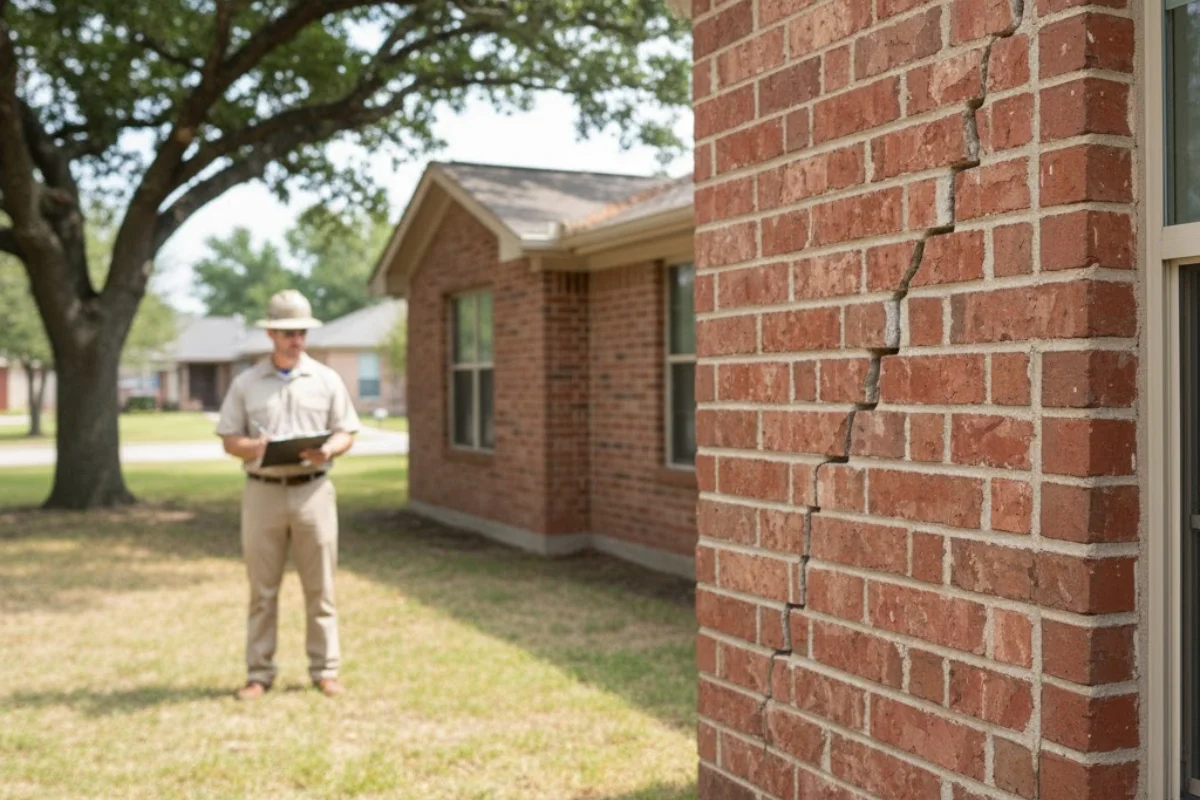

Foundation repair search behavior in Texas begins with alarm, not planning. Homeowners search when they notice cracks, shifting walls, or doors that suddenly stick, and they interpret these changes as possible structural failure rather than routine wear.
Texas soil and climate create the conditions for this reaction. Expansive clay shrinks during drought and swells after heavy rain, causing noticeable movement in homes. These visible changes trigger fear-driven searches aimed at fast certainty instead of slow comparison.
Because of this pattern, foundation repair search behavior in Texas carries unusually high intent. In metros such as Dallas, Austin, Houston, and San Antonio, homeowners search to confirm safety and get immediate professional evaluation when soil movement makes their homes feel unstable.
Why Texas expansive clay soil puts constant stress on foundations
Foundation repair search behavior in Texas begins with the way expansive clay soil reacts to moisture. This soil type grows when wet and shrinks when dry, which means the ground beneath a home is almost never stable for long periods.
As the soil expands, it pushes upward on parts of the foundation. When it dries, it pulls away and leaves gaps. This repeated push–pull cycle creates uneven support, which slowly bends, lifts, or drops different sections of the structure.
Homeowners do not see the soil moving, but they see the effects inside the home. Hairline wall cracks widen, tile floors separate, and doors stop latching cleanly. These changes feel structural, even when movement is gradual.
Because the stress is continuous rather than sudden, warning signs appear without a single dramatic event. A dry summer in Dallas or a wet spring in Houston can each produce noticeable interior changes. The house feels different from one season to the next.
These visible shifts drive search behavior. Homeowners search for foundation repair not after collapse, but after repeated small changes suggest something serious is happening underneath.
In Texas, expansive clay makes foundation stress a constant background condition. That constant stress explains why foundation repair searches often begin with fear and urgency rather than long-term planning.
How drought and heavy rain cycles change foundation repair search behavior
Foundation repair search behavior in Texas intensifies when long dry periods are followed by sudden heavy rain. Drought pulls moisture out of the clay soil, causing it to shrink and detach from the foundation edges. When intense rain arrives, the same soil rapidly swells and pushes back against the structure.
This rapid reversal creates noticeable movement in a short time. Walls that were stable during the dry period may crack after the first major storm. Floors that felt level can begin to slope slightly within days. These fast changes feel abnormal and alarming.
Homeowners respond to speed more than magnitude. Slow, gradual settling might go unnoticed for months. Sudden post-rain movement after drought triggers immediate concern and drives urgent foundation-related searches.
This pattern repeats across Texas metros. A dry stretch in Austin followed by heavy rainfall, or drought conditions in San Antonio broken by storms, often produces a burst of searches for inspections and repair evaluations within the same week.
Search behavior therefore clusters around weather transitions, not just extreme events. People search when the ground shifts quickly enough to make the house feel unstable, even if no structural failure has occurred.
Drought–rain cycles convert invisible soil physics into visible interior change. That conversion turns passive awareness into fear-driven, high-intent foundation repair searches.
Why visible cracks and sticking doors trigger fear-driven searches
Foundation repair search behavior in Texas often starts with small but visible changes inside the home. Wall cracks, ceiling separations, and doors that suddenly stick or swing open on their own feel like signs of structural failure, even when the underlying movement is moderate.
These symptoms appear in everyday spaces. A crack above a doorway in a Dallas living room or a misaligned doorframe in a Houston bedroom is impossible to ignore. Because the signs sit at eye level, homeowners interpret them as warnings rather than cosmetic flaws.
The fear comes from uncertainty. Most people cannot tell the difference between normal settling and foundation movement. Without that context, any new crack or shifting frame suggests that the house itself might be unstable.
This uncertainty drives immediate search behavior. Homeowners look for foundation repair information to confirm whether the problem is dangerous. The goal is reassurance or rapid intervention, not long-term comparison shopping.
Visible interior changes also create social pressure. Guests notice sloping floors or cracked walls, which reinforces the sense that something is wrong. In fast-growing areas around Austin and San Antonio, newer homeowners often react quickly because they have not seen these signs before.
These visual cues convert passive concern into active fear. That fear compresses decision time and produces high-intent foundation repair searches aimed at getting a professional inspection as soon as possible.
How fear compresses homeowner decision-making around foundation issues
Fear changes how Texans search for foundation repair by removing the usual comparison phase. When a home feels unstable, homeowners focus on getting certainty fast rather than evaluating multiple options over time.
In non-urgent home projects, people read guides, compare methods, and request several opinions. With foundation concerns, the same homeowners skip extended research because the risk feels structural and personal. The question becomes “is my house safe” rather than “which option is best.”
This emotional compression shortens the path from search to contact. Homeowners move from noticing cracks to requesting an inspection within the same search session. Calls and form submissions happen quickly because delay feels dangerous.
Fear also narrows attention. Technical details about repair methods matter less than confirmation that the home will not continue to shift. Searches aim to reach a qualified professional who can assess the situation immediately.
In dense Texas metros like Houston and Dallas, visible competition does not slow this behavior. Homeowners still choose quickly because reassurance is more valuable than extended evaluation when structural risk is suspected.
As a result, foundation repair search behavior in Texas carries built-in urgency. Fear converts observation into action, producing high-intent searches that seek immediate professional assessment rather than prolonged research.
Why foundation concerns turn research into immediate inspection requests
In Texas, visible signs of movement quickly shift searches from general research to direct foundation inspection requests. Homeowners do not linger in educational content when they suspect structural risk. They look for a qualified foundation repair contractor to examine the home as soon as possible.
This shift happens because uncertainty feels unsafe. Reading about causes and solutions does not answer the urgent question of whether the structure is stable. An on-site foundation evaluation provides the certainty that online information cannot.
Search behavior reflects this need for confirmation. Queries move from informational phrases about cracks or settling toward action-oriented searches for local foundation inspection services. The goal is not to learn more; it is to verify safety.
Texas climate patterns accelerate this transition. After rapid soil movement in cities like Dallas, Austin, Houston, and San Antonio, homeowners want a professional assessment before additional shifting occurs. Waiting for gradual comparison feels risky.
An inspection also feels reversible and lower commitment than full repair. Homeowners can act quickly without deciding on a repair method or cost. This makes immediate contact easier and more common.
Because of this pattern, foundation repair search behavior in Texas compresses into short paths that end in an inspection request. Fear and uncertainty turn curiosity into direct outreach to a foundation specialist rather than extended online research.
How regional soil variation changes perceived risk across Texas cities
Foundation repair search behavior in Texas varies by location because soil composition and moisture patterns are not uniform across the state. Different cities experience different types and intensities of ground movement, which changes how quickly homeowners perceive danger.
In areas around Dallas and Fort Worth, highly expansive clay creates strong shrink–swell cycles. Homes in these regions show more visible cracking after drought and rain transitions, which increases fear-driven foundation repair searches.
Parts of Houston sit on softer, moisture-sensitive soils with higher groundwater influence. Extended wet periods can soften support beneath slabs, causing uneven settlement that feels sudden and alarming. This leads to clusters of urgent foundation inspection requests after heavy storms.
In and around Austin, mixed soil profiles produce localized risk. Two neighborhoods can behave differently during the same weather event. Homeowners compare symptoms with nearby properties, and shared observations often trigger simultaneous searches for foundation evaluation.
Areas near San Antonio experience rapid moisture loss during heat followed by fast rehydration after storms. This swing creates noticeable interior changes over short periods, which raises perceived structural threat and accelerates search behavior.
Because each region expresses soil movement differently, perceived risk concentrates geographically. Local soil behavior, not just statewide climate, determines when homeowners feel their homes are unstable and begin high-intent searches for foundation repair services.
Why foundation repair searches in Texas carry unusually high purchase intent
Most home service searches begin with optional improvements. In Texas, foundation repair searches begin with perceived structural danger. That difference gives these searches unusually high purchase intent from the start.
Homeowners do not search foundations to compare styles or upgrades. They search to confirm whether their home is safe to live in. This safety framing turns a normal research step into a near-decision moment.
Because the underlying problem involves the entire structure, delay feels risky. People treat visible movement as something that must be evaluated now, not later. That urgency makes contact with a foundation repair company far more likely than passive browsing.
The cost and scale of foundation work also influence intent. Homeowners understand that if the issue is real, it will not resolve on its own. Searches therefore aim to reach a foundation specialist who can diagnose and explain next steps, not just provide general advice.
In fast-growing metros like Dallas, Austin, Houston, and San Antonio, homeowners often see nearby properties undergoing repairs. This local visibility reinforces the idea that foundation problems require professional intervention, which further raises intent.
As a result, foundation-related queries in Texas function less like research and more like pre-purchase behavior. The search itself signals readiness to schedule an inspection and move toward a defined repair plan if movement is confirmed.
Why foundation repair demand spikes after weather extremes instead of rising gradually
In Texas, foundation repair demand does not build slowly over time. It surges after major weather swings that force sudden soil movement beneath large numbers of homes at once.
Extended drought pulls moisture out of expansive clay, shrinking support around the foundation slab. When heavy rain follows, the soil rapidly swells and pushes unevenly against the structure. This quick reversal produces visible interior changes within days, not months.
Because many homes in the same area experience this shift together, search behavior synchronizes. Entire neighborhoods begin looking for a local foundation repair contractor at the same time instead of spreading inquiries evenly across the year.
These bursts often follow the first significant storm after a dry period in cities like Dallas or San Antonio, or prolonged wet cycles around Houston. The trigger is not gradual aging of the house but abrupt soil movement that makes the structure feel unstable overnight.
Homeowners react to change, not duration. A house that moved slightly for years without notice becomes alarming when cracks widen suddenly after a storm. That sudden change drives immediate, high-intent searches for a foundation inspection.
Once soil moisture stabilizes and movement slows, search activity drops back toward baseline. The spike ends because the shared environmental trigger has passed, not because underlying demand disappeared.
Environmental and behavioral forces behind fear-driven foundation repair searches in Texas
Texas foundation search behavior reflects the interaction between expansive clay soil, volatile moisture cycles, and homeowner risk perception. These external conditions turn routine soil movement into visible home changes that feel structurally dangerous, which pushes searches rapidly from curiosity to action.
How prolonged drought magnifies soil shrinkage around foundations
Extended dry periods pull moisture out of clay soils and create gaps beneath and beside the foundation slab. When support drops unevenly, interior cracks widen and floors tilt slightly, which makes homeowners fear structural failure and begin urgent searches for foundation inspection.
Why sudden downpours rapidly re-expand dried clay soils
After drought, heavy rain quickly saturates and expands the same clay that previously shrank. This fast upward pressure produces new wall and ceiling cracks within days, triggering high-intent searches for a local foundation repair contractor.
How temperature swings increase structural stress signals
Heat accelerates evaporation while cooler, wetter periods restore moisture. These back-and-forth shifts move the ground repeatedly, creating recurring interior symptoms that keep homeowners searching for repeated foundation evaluation rather than one-time reassurance.
Why neighborhood-level soil patterns concentrate foundation concerns
Homes built on the same soil profile often move together. When several houses in one block show cracks at the same time, shared observation amplifies fear and produces clustered searches for nearby foundation repair services instead of isolated inquiries.
How fear-driven foundation repair search behavior in Texas should be interpreted
Fear in these searches reflects perceived structural risk created by soil and climate, not necessarily catastrophic damage. High intent shows a strong need for certainty and safety, which is why searches quickly convert into inspection requests after major soil movement events.
Demand therefore appears in bursts following drought–rain reversals or extreme weather rather than as steady, gradual growth. When soil moisture stabilizes, search activity drops back to normal even though long-term foundation repair visibility remains unchanged.
Interpreted over time, Texas foundation search behavior measures how homeowners react to sudden ground movement. Spikes signal moments when environmental stress turns uncertainty into immediate action.