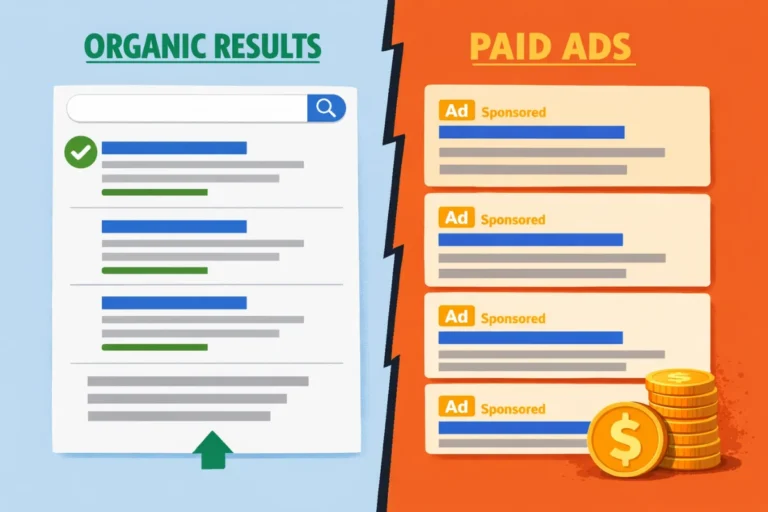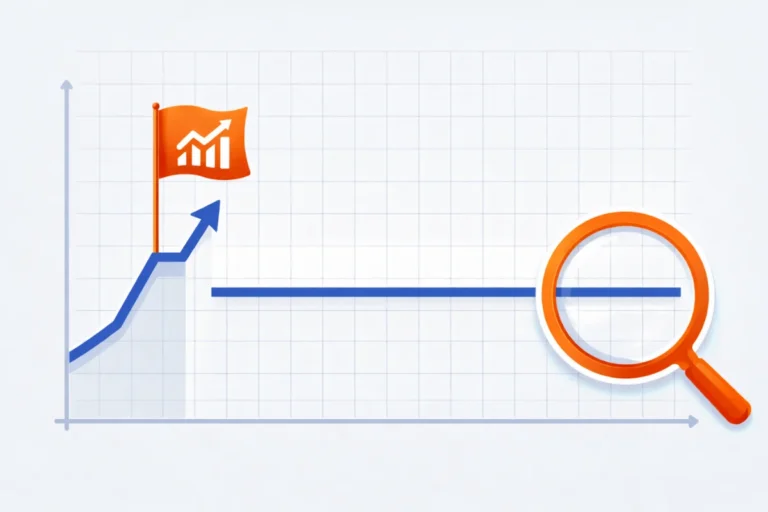


SEO is often expected to solve growth problems by delivering more leads. When calls increase but jobs don’t close, contractors usually assume the traffic is poor or the SEO isn’t working. In many cases, the opposite is true—visibility improves, but the sales process fails to convert attention into revenue.
Search engines can influence who sees a contractor and when, but they do not control what happens after first contact. Missed follow-ups, slow response, unclear communication, and weak qualification all occur after SEO has done its job. When these breakdowns exist, adding more traffic only exposes the problem faster.
This article explains why SEO can’t fix a broken sales process by clearly separating the role of visibility from the role of conversion. Instead of blaming SEO for poor outcomes, it examines where SEO influence ends, where sales responsibility begins, and why broken handoffs distort how performance is judged.
Table of Contents
Why SEO Can’t Fix a Broken Sales Process for Contractors
SEO can’t fix a broken sales process because visibility and conversion are separate responsibilities. SEO brings attention by placing a contractor in front of people who are actively searching. What happens after that—how calls are handled, how trust is built, and how follow-up occurs—is entirely outside SEO’s control.
When a sales process is broken, leads fail regardless of source. Calls may go unanswered, responses may be delayed, or conversations may lack clarity. From the search engine’s perspective, the contractor was visible and selected, but the interaction did not resolve intent. SEO delivered the opportunity; sales execution determined the outcome.
This disconnect often leads to misplaced blame. Contractors see traffic increase without revenue growth and assume SEO failed. In reality, SEO amplified exposure, making sales weaknesses more visible. More traffic does not repair broken handoffs—it magnifies them.
Understanding this boundary is critical. SEO’s role ends at intent connection. If the system receiving that intent is unreliable, no amount of additional visibility can compensate. SEO can create opportunities, but it cannot complete the sale.
Where SEO Influence Ends and Sales Responsibility Begins
SEO influence ends at the moment a homeowner decides to reach out. Up to that point, search engines evaluate relevance, proximity, and likelihood of satisfaction. Once contact is initiated—through a call, form, or message—the outcome depends entirely on the contractor’s sales process.
This boundary is often misunderstood because both SEO and sales are measured using lead counts. However, a lead is not a conversion. SEO can influence who contacts the business, but it cannot influence how the business responds. Response speed, tone, clarity, and follow-up are sales responsibilities, not visibility functions.
When sales execution is weak, SEO performance becomes distorted. Leads arrive but do not progress. From the contractor’s perspective, it looks like “bad traffic.” From the search engine’s perspective, it looks like a business that fails to resolve intent after being chosen. These are fundamentally different problems.
Recognizing where SEO ends prevents misdiagnosis. If leads are coming in but outcomes are poor, the issue is not reach—it is handling. SEO delivered attention; sales must deliver resolution.
How Sales Process Failures Cancel SEO Results
Sales process failures cancel SEO results because they break the intent-to-resolution chain. SEO succeeds when a homeowner’s search intent is met with a clear, timely, and trustworthy response. When that response fails—through missed follow-ups, poor qualification, or unclear communication—the original SEO success is effectively erased.
From a behavioral standpoint, failed interactions matter more than successful impressions. Homeowners who don’t get answers quickly return to search and choose another contractor. Search engines observe this pattern and infer that the first selection did not satisfy intent. Over time, visibility shifts toward businesses that resolve inquiries more reliably.
Sales failures also create false negatives in performance analysis. Contractors see leads that don’t close and conclude the leads were unqualified. In reality, the qualification step failed because the process couldn’t capture urgency, scope, or expectations effectively. SEO didn’t send the wrong people; the system failed to guide the right ones forward.
When these failures repeat, SEO appears inconsistent or weak. The truth is harsher and simpler: SEO results are only as strong as the process that receives them. When sales execution breaks, SEO doesn’t underperform—it gets neutralized.
Why More SEO Traffic Often Makes the Problem Worse
More SEO traffic often makes the problem worse because it scales failure, not success. When the sales process is broken, additional visibility increases the number of missed opportunities rather than improving outcomes. SEO does not filter for operational readiness—it simply brings more people to the same system.
As traffic increases, weak response patterns become more visible. Missed calls, delayed replies, and inconsistent follow-up occur more frequently, creating a larger volume of unresolved interactions. From the search engine’s perspective, this looks like repeated failure to satisfy intent, which reduces confidence in the business as a reliable result.
This amplification effect also distorts perception. Contractors see more leads coming in but no improvement in revenue, which reinforces the belief that SEO is attracting the “wrong” audience. In reality, the audience is correct—the system receiving them is not equipped to convert attention into outcomes.
Because of this, increasing SEO investment without addressing sales execution often accelerates decline. More traffic doesn’t fix broken processes; it exposes them faster. SEO magnifies whatever system it feeds into, good or bad.
How Trust Is Lost After the First Contractor Contact
Trust is often lost after the first contractor contact, not before it. SEO brings a homeowner to the point of action, but what happens next determines whether confidence is reinforced or broken. Slow replies, vague answers, or unprofessional communication introduce doubt at the exact moment trust should be solidifying.
In contractor decisions, the first interaction sets expectations for the entire project. Homeowners interpret response quality as a preview of how the job will be handled. When follow-up is inconsistent or unclear, the perceived risk increases—even if the contractor appeared credible in search results.
Search engines indirectly observe this breakdown through user behavior. When homeowners abandon contact attempts and return to search, it signals that trust was not established. Over time, listings associated with these failed trust moments are surfaced less often during high-intent searches.
This is why strong SEO can coexist with weak outcomes. Visibility earns attention, but trust must be earned again during contact. When that handoff fails, SEO cannot compensate, and repeated trust loss eventually feeds back into reduced visibility.
Why Lead Quality Is Blamed When Sales Is the Issue
Lead quality is often blamed when sales is the issue because outcomes are judged after failure, not before it. When leads don’t close, it feels easier to question where they came from than to examine how they were handled. SEO becomes the visible target, while sales execution remains invisible.
In many contractor businesses, leads are evaluated only after contact attempts fail. Missed calls, rushed conversations, or weak follow-up create disengagement, but the disengagement is attributed to “bad leads.” This mislabeling hides the real problem: the process did not adapt to the lead’s urgency, scope, or expectations.
Search engines don’t distinguish between “bad leads” and “bad handling.” They only see whether intent was resolved. When users repeatedly abandon interactions and choose competitors, algorithms infer dissatisfaction regardless of lead source quality. The system responds by reducing exposure, not by improving lead quality.
This is why blaming lead quality is dangerous. It delays correction and creates false confidence that the acquisition channel is broken. In reality, SEO delivered interested users—the sales process failed to convert them. Until that distinction is understood, visibility problems will continue to be misdiagnosed.
How Broken Sales Processes Distort SEO Performance Metrics
Broken sales processes distort SEO performance metrics because measurement stops at the wrong point. SEO is often judged by closed jobs, even though its influence ends much earlier in the journey. When sales execution fails, SEO metrics are interpreted through outcomes they were never responsible for producing alone.
Traffic, rankings, and leads may all improve while revenue stays flat. From a reporting standpoint, this looks like underperformance. In reality, SEO is delivering attention and intent, but those signals are being lost after contact. The metrics are accurate—the interpretation is not.
Another distortion comes from last-touch bias. When jobs eventually close through referrals, direct calls, or follow-ups weeks later, SEO’s early influence disappears from reports. Contractors conclude SEO “didn’t work,” even though it introduced the relationship long before the sale occurred.
This distortion creates a feedback loop. SEO is scaled down or abandoned while sales issues persist, reinforcing the belief that SEO was ineffective. In truth, the data was never wrong—the lens used to evaluate it was.
Why Contractors Blame SEO When Sales Is the Real Bottleneck
Contractors blame SEO when sales is the real bottleneck because SEO is visible and external, while sales processes are internal and habitual. It’s easier to question traffic quality than to audit response speed, follow-up consistency, or communication clarity.
Why can’t SEO fix a broken sales process for contractors?
SEO can’t fix a broken sales process for contractors because it only controls visibility, not conversion. Once a lead reaches out, the outcome depends entirely on how that interaction is handled. SEO can deliver opportunity, but it cannot complete the sale.
Does SEO fail when contractor sales are weak?
SEO does not fail when contractor sales are weak—it becomes misrepresented. Visibility may improve while results don’t, creating the illusion of failure. The breakdown occurs after contact, not in search performance.
Can better SEO overcome poor follow-up?
Better SEO cannot overcome poor follow-up. In fact, more visibility often exposes weak follow-up faster by increasing the number of missed or mishandled interactions. SEO amplifies systems; it does not repair them.
How should contractors evaluate SEO when sales are broken?
Contractors should evaluate SEO by whether it delivers qualified attention, not by whether sales closes efficiently. When leads increase but outcomes don’t, the evaluation should shift to post-contact handling rather than acquisition quality.
What “SEO Can’t Fix a Broken Sales Process” Really Means
When we say SEO can’t fix a broken sales process, it doesn’t mean SEO is ineffective. It means SEO operates within a defined boundary. Its job is to connect intent to opportunity. What happens next determines whether that opportunity becomes revenue.
SEO is often blamed because it is the first system contractors interact with when growth stalls. But visibility is rarely the problem when leads exist. The real issue is what happens after the phone rings or the form is submitted.
Understanding this boundary changes how performance is interpreted. SEO doesn’t fail when sales is broken—it reveals the break. When contractors separate visibility from conversion and evaluate each honestly, SEO performance becomes clearer, and the real constraints come into focus.