

Emergency contractor SEO operates under a different set of conditions than standard contractor services. When something breaks suddenly, homeowners don’t search, compare, and decide the same way they would for planned work. Urgency compresses decision-making, changes how search results are used, and alters what search engines prioritize in real time.
In urgent situations, visibility is evaluated through speed, proximity, and perceived reliability rather than depth of information. Search engines respond to this behavior by surfacing results that reduce hesitation and enable immediate action. As a result, emergency contractor SEO produces different lead patterns, ranking volatility, and performance expectations than non-emergency services.
This article explains why emergency contractor SEO behaves differently by examining how urgency reshapes search intent, user behavior, and algorithmic evaluation. Instead of tactics or optimization advice, it focuses on the mechanics that drive emergency visibility, why results arrive in bursts, and why traditional SEO benchmarks often fail to explain emergency service performance.
Why Emergency Contractor SEO Follows Different Search Behavior
Emergency contractor SEO follows different search behavior because urgency collapses the decision process. In emergency situations, homeowners are not researching options—they are trying to restore safety, functionality, or comfort as quickly as possible. Search engines recognize this shift and change how results are evaluated and displayed.
Emergency searches carry compressed intent (the searcher is ready to act immediately). There is little tolerance for delay, uncertainty, or exploration. As a result, users interact with search results differently: they skim less, scroll less, and choose faster. Search engines respond by prioritizing results that appear immediately actionable rather than informationally thorough.
This behavior also changes engagement signals. Emergency searches generate rapid clicks, quick calls, and minimal back-and-forth. When users hesitate or return to search results, it signals friction rather than comparison. Over time, search engines learn which results reduce hesitation fastest and favor those during urgent queries.
Because of this compression, emergency contractor SEO behaves less like a gradual visibility system and more like a real-time usefulness filter. Results are judged by how efficiently they connect a searcher to immediate help. Understanding this difference is essential before interpreting rankings, traffic, or lead patterns for emergency services.
How Urgency Changes Search Intent in Emergency Contractor SEO
Urgency changes search intent by collapsing multiple decision stages into a single moment. In emergency contractor SEO, searches skip the usual progression from research to comparison to selection. Urgency-driven intent (searches triggered by immediate risk or disruption) signals that the homeowner is ready to act now, not evaluate options over time.
This shift alters what search engines look for. Instead of rewarding detailed explanations or broad coverage, algorithms prioritize signals that indicate immediate resolution potential. Searches become less about learning and more about availability, responsiveness, and proximity. Pages or listings that feel slow, ambiguous, or indirect are filtered out quickly through user behavior.
Urgency also reduces tolerance for uncertainty. Homeowners are less willing to interpret unclear service scope, vague availability, or indirect contact paths. When intent is urgent, any friction feels amplified. Search engines detect this through fast exits, skipped results, or immediate selection of alternatives, and they adapt exposure accordingly.
Because intent is compressed, emergency contractor SEO produces fewer exploratory interactions and more decisive actions. This is why emergency searches often generate calls without extended engagement and why traditional intent assumptions used in non-emergency SEO fail to explain emergency performance. Urgency doesn’t just accelerate intent—it reshapes it entirely.
Why Phone Calls Dominate Emergency Contractor SEO Results
Phone calls dominate emergency contractor SEO results because they are the fastest path to resolution. In urgent situations, homeowners prioritize immediate confirmation over detailed evaluation. Calling removes uncertainty in seconds—availability, response time, and capability can all be verified instantly. Search engines recognize this preference and elevate results that facilitate rapid contact.
Emergency searches also trigger call-first interfaces. Search results prominently display click-to-call options because historical behavior shows that users act this way under pressure. When homeowners consistently choose to call rather than fill out forms, algorithms reinforce that pattern by surfacing listings optimized for immediate interaction during urgent queries.
Another reason calls dominate is risk reduction. Emergencies involve potential damage, safety concerns, or escalating costs. Speaking to a real person provides reassurance that a problem is being handled now. Forms introduce delay and uncertainty, which feels unacceptable when the situation is time-sensitive. Search engines interpret delayed actions as friction and shift visibility toward results that generate faster engagement.
This call-heavy behavior changes how emergency contractor SEO should be interpreted. Low page engagement or minimal form submissions are not signs of weak performance—they reflect decisive intent. In emergency contexts, success is measured by speed and connection, not by prolonged interaction.
How Local Pack Visibility Drives Emergency Contractor SEO
Local pack visibility drives emergency contractor SEO because it places immediacy, proximity, and contact access at the center of the search experience. The local pack (map-based results showing nearby businesses with call buttons and reviews) is designed for situations where users need help now, not later. Emergency searches trigger this layout more aggressively than non-urgent queries.
In emergency scenarios, homeowners rarely scroll past the first visible options. The local pack compresses decision-making by presenting only a few nearby contractors, reducing cognitive load. Search engines prioritize these results because historical behavior shows they resolve urgent intent faster than traditional organic listings.
Local pack results also surface contextual trust cues instantly—distance, ratings, and business legitimacy—without requiring a click. In emergencies, these cues replace deep research. A contractor that appears reachable, nearby, and credible is far more likely to be contacted than one ranking #1 organically but positioned below the map.
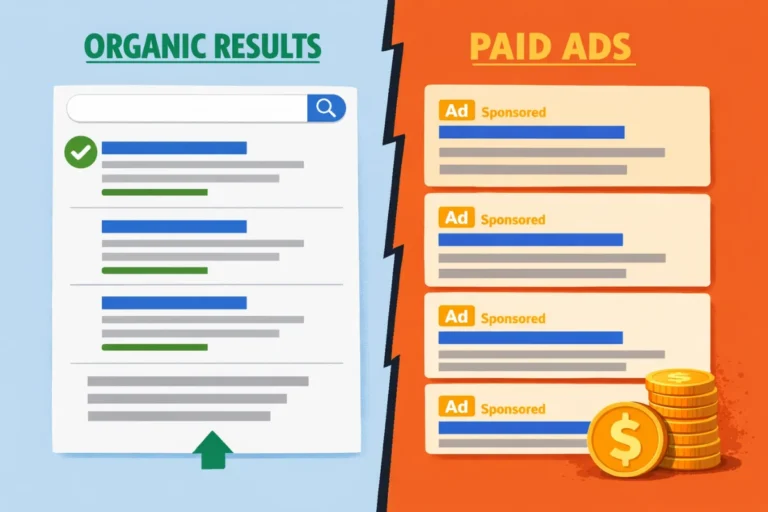
Because of this dominance, emergency contractor SEO is evaluated differently. Organic rankings still matter, but local pack placement often determines who receives calls. Understanding this hierarchy explains why emergency visibility can feel volatile and why performance is tied to moment-to-moment usefulness rather than static rank.
Why Emergency Contractor SEO Is More Volatile Than Standard SEO
Emergency contractor SEO is more volatile because demand arrives in bursts, not on a steady curve. Emergencies are triggered by unpredictable events—failures, damage, safety risks—which cause sudden spikes in search activity followed by quiet periods. Search engines adapt quickly to these shifts, making visibility more fluid than in non-emergency SEO.
Another source of volatility is real-time competition testing. When emergency demand spikes, search engines rapidly evaluate which contractors respond fastest and satisfy intent most effectively. Listings that generate quick calls and resolved interactions gain exposure, while others are deprioritized just as quickly. This constant testing creates noticeable movement in rankings and local visibility.
Emergency searches also amplify behavioral sensitivity. Small changes in engagement—missed calls, delayed responses, or user hesitation—carry more weight because intent is immediate. Search engines react faster to these signals than they would for planned services, increasing short-term fluctuation even when overall relevance remains intact.
This volatility often feels like instability, but it is actually responsiveness. Emergency contractor SEO reflects how search engines prioritize immediate usefulness under pressure. Visibility rises and falls as demand shifts and performance signals change, which is why emergency SEO rarely follows the smooth patterns seen in standard contractor services.
Why Trust Thresholds Are Higher in Emergency Contractor SEO
Trust thresholds are higher in emergency contractor SEO because homeowners are making decisions under stress, uncertainty, and potential loss. In these moments, the cost of choosing wrong feels amplified. Trust threshold (the minimum level of confidence required before taking action) rises sharply when safety, property damage, or urgent disruption is involved.
Search engines respond to this heightened sensitivity by favoring results that reduce perceived risk fastest. Indicators such as clear business identity, consistent presence, and strong behavioral validation become more important than detailed explanations. If a listing feels uncertain—even briefly—users move on immediately. That hesitation is recorded and factored into future visibility decisions.
Emergency situations also limit second chances. Homeowners are less willing to “try again” if the first interaction feels unreliable. Missed calls, unclear availability, or ambiguous service signals create friction that search engines interpret as failure to satisfy urgent intent. As a result, contractors who appear trustworthy but cannot reassure quickly lose exposure during emergency searches.
This is why emergency contractor SEO behaves differently from standard services. Trust is not built gradually—it must already exist at the moment of need. Search engines prioritize contractors who consistently clear that higher trust threshold under pressure, which explains why emergency visibility is selective, dynamic, and unforgiving.
Why Emergency Contractor SEO Is Often Misunderstood
Emergency contractor SEO is frequently misunderstood because it behaves more like a real-time response system than a gradual visibility model. Contractors often apply expectations formed from standard SEO—steady growth, predictable rankings, and consistent lead flow—to emergency services, where those assumptions no longer hold. The result is confusion, not failure.
Does emergency contractor SEO work faster than regular SEO?
Emergency contractor SEO can appear to work faster because urgency compresses decision timelines. When demand spikes, visibility may translate into calls almost immediately. This speed reflects intent alignment, not accelerated SEO progress, and it often disappears when urgency subsides.
Why do emergency contractor SEO leads come in bursts?
Emergency contractor SEO leads arrive in bursts because emergencies themselves are episodic. Search demand clusters around incidents rather than spreading evenly over time. SEO visibility adjusts to these clusters, which is why lead flow feels uneven even when performance is strong.
Why does emergency contractor SEO feel inconsistent?
Emergency contractor SEO feels inconsistent because search engines constantly recalibrate exposure based on real-time behavior. Small changes in responsiveness or user hesitation have outsized impact under urgent conditions. What looks like instability is often rapid feedback, not decline.
How should contractors evaluate emergency contractor SEO performance?
Emergency contractor SEO should be evaluated by responsiveness and alignment, not by steady metrics. Visibility during high-intent moments matters more than average rankings or traffic trends. Performance is best judged by how reliably SEO connects urgent searches to immediate action.
What Emergency Contractor SEO Really Represents
Emergency contractor SEO represents how search engines prioritize speed, certainty, and risk reduction under pressure. It is not designed to reward gradual authority building or long consideration cycles. Instead, it surfaces contractors who appear ready, reliable, and reachable at the exact moment help is needed.
This is why emergency SEO often feels volatile compared to standard services. Visibility expands and contracts as demand appears and disappears. Trust must already be established before the search happens, and engagement must resolve intent quickly once it does.
Understanding this reframes expectations. Emergency contractor SEO is not broken when leads pause, and it is not magically “working” when calls spike. It is responding to urgency. When contractors evaluate emergency SEO through this lens, performance patterns become clearer—and results make sense within the context they actually occur.